

 chargement...


In October, the UN Security Council is slated to cast a crucial vote on a new resolution regarding Western Sahara. This upcoming text might break from tradition by endorsing the Moroccan autonomy plan, introduced in 2007, as the exclusive solution to the ongoing conflict. With just two months left until this pivotal moment, «behind-the-scenes negotiations» are in full swing, as reported by Africa Intelligence.
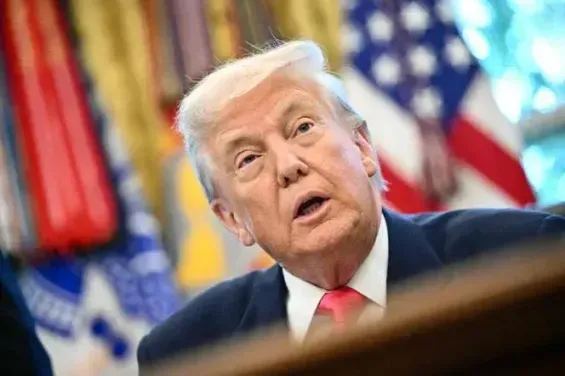
The Trump administration is at the forefront of these negotiations, aiming to rally Security Council members around the U.S. president's strategy to reignite dialogue, which has been stalled since March 2019, centered solely on the Moroccan proposal.
President Trump made his stance clear in an August 2 message to King Mohammed VI for the Throne Day. «The Moroccan Autonomy Proposal, considered serious, credible, and realistic, is the only basis for a just and lasting resolution of this dispute», asserted the 47th president of the United States. So far, neither Algeria nor the Polisario Front has responded to this letter.
Alger's Discretion
To further its agenda, the Trump administration has engaged in dialogue with Algeria. Notably, the visit by Massad Boulos, President Trump's special advisor for Africa, to Algiers at the end of July, where he met with President Abdelmadjid Tebboune, is highlighted by the French-speaking media.
In a subsequent interview with an Algerian outlet, Boulos stated, «The United States recognizes Moroccan sovereignty over Western Sahara and backs Morocco's serious, credible, and realistic autonomy proposal as the only foundation for a fair and lasting solution to the conflict».
Since then, «Algerian diplomacy has remained notably silent on Rabat's highly sensitive autonomy plan for Western Sahara», Africa Intelligence observes. The last public comment from the Algerian president on this matter was on July 18, two weeks before Trump's message to Mohammed VI.
The American viewpoint is echoed by two other permanent members of the Security Council: France and the United Kingdom. However, China and Russia have yet to disclose their positions.
Among the non-permanent members of the Council, aside from Algeria, a majority backs the Moroccan solution proposed in 2007, including Denmark, Greece, Pakistan, Slovenia, and the Republic of Korea. Additionally, Panama, Somalia, the Cooperative Republic of Guyana, and Sierra Leone have publicly recognized Moroccan sovereignty over the Sahara.
The U.S. commitment to resolving this issue extends beyond diplomatic channels. A State Department team recently visited Laayoune to meet with the head of MINURSO, Russian Alexander Ivanko. This visit aligns with Washington's push for the UN to scale down the mission's personnel, aiming to close the chapter on organizing a self-determination referendum in the region and reinforce the Moroccan solution's primacy.