


 chargement...


Recently, the results of the «Green Index 2025» were released, marking the first national quantitative study designed to track Moroccan citizens’ perceptions and knowledge of climate change, sustainability, and environmental engagement. Produced under the «Diraya» project, with support from the International Development Research Centre and in partnership with the Arab Reform Initiative, the report offers a comprehensive overview based on field data from a representative sample of 1,015 respondents.
The study revealed a high level of public awareness about the dangers of climate change: 78% of respondents view it as a «real threat» to Morocco. This perception is strongly linked to direct experiences with prolonged droughts, rising temperatures, and extreme weather events.
Yet, awareness does not always translate into deep knowledge or active engagement. Some 63% of participants described their understanding of environmental and climate issues as only «moderate» or «partial», while 52% admitted they were unfamiliar with Morocco’s environmental laws and policies.
When it comes to information sources, social media (33%) and television (27%) are the main channels Moroccans rely on to stay informed about environmental issues, underscoring the importance of both digital and traditional media in shaping environmental awareness.
The Most pressing environmental challenges
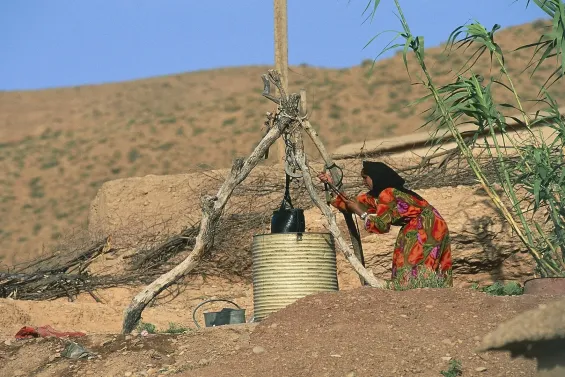
Drought and water scarcity stand out as Morocco’s most urgent environmental challenge, identified by 47% of respondents. A further 32% expect drought to remain the most severe issue over the next five years, reflecting widespread concern about dwindling water resources.
On responsibility for climate action, respondents see it as shared between individuals and families (28%), the government (24%), and the industrial sector (16%). They cited the main causes of environmental problems as a lack of public awareness (37%) and ineffective government policies (18%).
Civic participation and future engagement
The report also highlights a gap in organized civic participation: only 18% said they had taken part in environmental activities over the past five years. The main obstacles were the absence of nearby initiatives (40%) and lack of time (28%), while just 3% said the issue was not a priority.
Despite this, future engagement looks promising. Nearly two-thirds (63%) expressed strong willingness to participate in environmental activities, while another 28% showed moderate readiness. Respondents suggested that participation could be boosted by more local initiatives and volunteering opportunities (28%), public awareness and education campaigns (20%), and stronger government support (20%).