

 chargement...


In 2016, three women who had experienced cancer came together to found «Dar Zhor» in Casablanca. The idea originated from one of them, who had personally benefited from psychological support programs in Europe that helped her through recovery, an experience that convinced her of the need to create a similar space in Morocco.
That’s how the journey began: an association using psychological, artistic, and physical support to help cancer patients face their illness with greater strength and morale.
Psychological Support to Restore Inner Balance
Over the years, Dar Zhor has evolved into a comprehensive humanitarian space offering far more than medical assistance. It supports adult cancer patients during and after treatment through a holistic approach that integrates body, mind, and social connection.
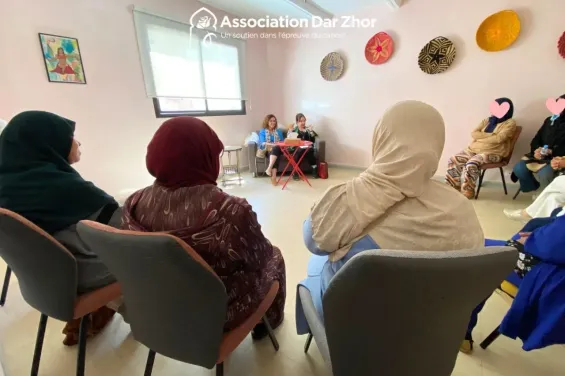
According to Majda Gharbi, the association’s director, Dar Zhor provides individual and group therapy sessions led by psychologists, alongside artistic workshops that include theater, music, dance, and painting. Patients also benefit from therapeutic techniques such as clinical hypnosis and sophrology, which target the emotional and psychological challenges that often affect treatment outcomes.

Physical well-being is equally prioritized through guided yoga and Qigong sessions, focused on breathing and body balance to help reduce stress and improve mood. The association also offers relaxation and self-care treatments, including energy healing and socio-aesthetic care, to help patients regain confidence and a sense of comfort.
Dar Zhor complements these services with nutritional counseling for patients undergoing treatment and dermatology-led workshops on managing the side effects of chemotherapy.
Supported by a team of 40 volunteer specialists, including psychologists, sports coaches, and art therapists, the association works with a shared mission: helping patients rebuild their strength and rediscover joy.
Beyond Treatment: Awareness and Prevention
Dar Zhor’s work extends beyond individual care. It also plays a vital role in raising awareness about cancer through social media campaigns, solidarity walks (like the one planned for November 9), and corporate workshops promoting early detection.

Before welcoming a new case, we conduct an initial interview to gather key information and determine the appropriate type of support. Each patient receives a personalized program», Majda Gharbi told Yabiladi.
Gharbi expressed pride in the association’s transformative impact: «Many beneficiaries arrive devastated and hopeless, but after a few weeks, we see them more optimistic and confident, with a renewed desire to live».
Some recovered women have become ambassadors for Dar Zhor, participating in awareness campaigns and conducting self-examination workshops in working-class neighborhoods. Others have chosen to continue their studies in the ‘Patient Partner’ program to help accompany new patients through treatment.
The association also produces awareness videos in Arabic, French, and Amazigh to reach wider audiences across Morocco.

Despite these achievements, Dar Zhor faces financial challenges that limit its expansion. Currently based only in Casablanca, it hopes to grow to Marrakech and Rabat, supported by new partners and donors.
Art as a Path to Healing
Around 90% of beneficiaries are women, as men often find it harder to seek psychological support, explains Gharbi. Dar Zhor also aims to break the stigma surrounding cancer and combat the perception of it as a «shameful» or «ugly» disease.
«What hurts patients most is hearing words like ‘poor thing’ or ‘pity.’ Respect and understanding are the first forms of support», she said.

In that spirit, the association launched a play directed by Zakaria Hassani, where patients shared their stories on stage to encourage others to speak openly about their experiences. The performance has already been staged three times, with plans to tour other Moroccan cities.
Gharbi concluded with an appeal to women to remain vigilant about their health: «Any unusual change in the body should not be ignored. From age 45, it’s crucial to see a doctor for an X-ray or ultrasound if anything feels different».
With its humanitarian mission and lasting impact, Dar Zhor hopes one day to open a center next to every cancer treatment facility in Morocco, continuing its mission of planting hope in the hearts of those who need it most.