


 chargement...


Coinciding with the 50th anniversary of the outbreak of the Sahara conflict, Spain’s Elcano Royal Institute for International and Strategic Studies published a report on the evolution of the dispute, concluding that after the latest UN Security Council resolution, «all the cards are now in Morocco’s hands».
The institute, honorarily chaired by King Felipe VI and overseen by several Spanish ministries and public and private institutions, stated that Resolution 2797 «essentially marks the end of the process that began in 1991 with a peace plan calling for a referendum».
According to the report, Morocco now enjoys a «tremendous advantage» over the Polisario Front, which has been «left to its fate». It recalled that since the Green March, the Royal Armed Forces have consolidated control over most Saharan territories and have maintained authority over «80% of the region’s 266,000 square kilometers» since 1991. Supported by Washington, Morocco’s military dominance has allowed it to «control what is known as the useful Sahara» and to thwart repeated Polisario attempts to shift the balance of power, particularly since the liberation of the Guerguerat crossing in November 2020.
On the political and diplomatic fronts, the institute notes that Morocco is also «steadily advancing», citing major investment efforts in the region, while the Polisario leadership remains «economically weak and politically marginalized», unable to meet the growing frustrations of the Sahrawi population.
The report highlights the alignment of the United States, France, Spain, the United Kingdom, and Germany with Morocco’s sovereignty stance, an alignment that, it recalls, «has become more pronounced since Donald Trump’s decision in December 2020 to recognize Western Sahara as Moroccan territory».
«Algeria is Tired of Defending a Lost Cause»
The Elcano Institute points out that the self-proclaimed «Sahrawi Arab Democratic Republic» is now recognized by only 47 countries, compared to 84 previously. Morocco, it says, has succeeded not only in preventing the 1991 referendum but also in imposing «a new framework centered on autonomy as the most realistic path to resolving this long-standing conflict».
It recalls that as early as June 2000, former UN Secretary-General Kofi Annan acknowledged that «the process of identifying eligible Sahrawi voters and implementing the settlement plan, except for maintaining the ceasefire, had reached a deadlock since the end of 1995».
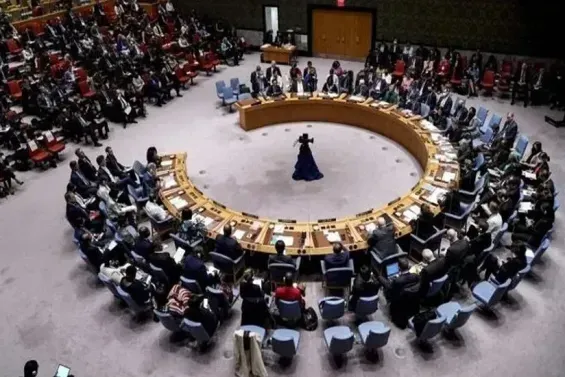
Commenting on the recent Security Council vote, the institute noted that Resolution 2797 was adopted with 11 votes in favor, while «Russia, China, and Pakistan abstained, signaling their indifference to the fate of the Sahrawis». Algeria’s absence from the vote, it added, reflected «its fatigue from defending a cause that no longer yields any benefit».
Although the resolution does not explicitly rule out self-determination, the institute concludes that «holding a genuine referendum, which was already nearly impossible, has now become closer to a miracle».