

 chargement...


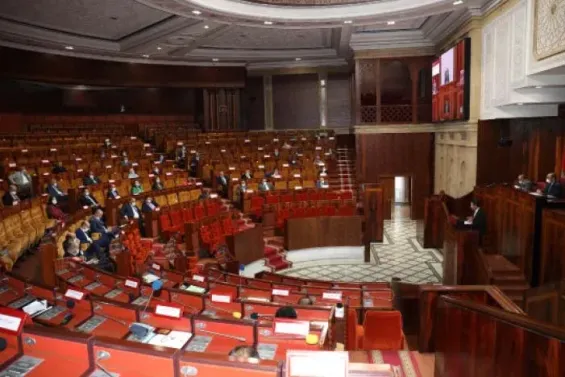
The Movement for Parity Democracy denounced «political violence against women» in a public letter addressing the House of Representatives on Nov. 25, 2025. The letter was released on the eve of the 16 Days of Activism against Gender-Based Violence, initiated by UN Women from Nov. 25 to Dec. 10, 2025. Consulted by Yabiladi, the correspondence aims to incorporate this awareness in the broader struggle for women's rights.
«Today, we highlight various forms of violence: physical, moral, economic, even digital... But we refuse to recognize political violence for what it is», asserted Khadija Rebbah, coordinator of the Movement for Parity Democracy, to our editorial team. «We also know that as each election approaches, women are prevented within the very parties from fully accessing candidacies, through pressures and based on opaque criteria: this is political violence», she said.
Currently, women represent only 24.3% of Parliment, which «remains far below expectations in light of the country's social transformations, contradicting Morocco's commitments to gender equality», the letter notes. Nov. 25 marks the International Day for the Elimination of Violence against Women, while Dec. 10 is Human Rights Day. During the 16 days of mobilization, the organization aims to «contribute to protecting and strengthening the progress made by Morocco in terms of equality» and establish fair political participation.
No Consultation with the Movement on Women's Participation
Rebbah expressed her dismay at the «erosion of participatory democracy», a principle enshrined in the Constitution and Morocco's international commitments. The activist also denounced the «backtracking on the implementation of the principle of parity in elective mandates and functions».
The activist laments the absence of parity, especially as the Ministry of the Interior «announces a new phase of governance based on transparency». «It has made proposals for regional electoral lists to be dedicated to women. From the outside, this would seem like progress. But upon closer inspection, the effects in terms of numbers will not change significantly», she said.
During a recent meeting of the Interior Commission at the House of Representatives, the debate on this subject was tense. In the presence of Minister Abdelouafi Laftit, majority female MPs held their parties responsible for obstructing women's access to local constituencies, ignoring the demands for one-third of the House's seats, or 132 seats compared to the current 90 provided through regional lists.
Rebbah states that the movement «has advocated starting with a comprehensive evaluation of women's political empowerment before drafting any bill». «This step allows for a better understanding of the evolution of representation and participation, the guarantees of participatory democracy and protection against abuses, as well as political violence, so that the proposals better correspond to reality. We requested a hearing since August 15, which has remained unanswered», she told Yabiladi.
As a result, the Movement for Parity Democracy made its letter public. «Our structure includes more than 1,000 civil society organizations. We have been advocating for equal representation since 2005, formerly under the name 'Movement for the Third'», Rebbah explained.
«We are following the debate on electoral laws, especially the organic bill 53.25 amending 27.11 related to the House of Representatives, 54.25 amending 29.11 related to political parties and the bill 55.25 amending law 57.11 related to electoral lists, referendums and the use of public audiovisual media during electoral and referendum campaigns», she said.
«Given their fundamental value, these texts should be a subject of political and associative consultation, both with parties and women's rights bodies. However, feminist structures that have been working on them for twenty years have not been listened to».
«Recognize Political Violence in Electoral Legislation"
The activist is outraged by this exclusion, especially since the movement «has always been involved in all stages of consultations». «This time, despite our request to fulfill our constitutional role as civil society in participating in the development of the electoral process guidelines that these bills represent, we have not had this space for exchange and debate», the coordinator told us, lamenting «an exclusive consultation with party leaders».
In this context, the letter called on the House of Representatives to «take urgent measures to ensure respect for the democratic process, preserve the independence of Parliament, and present all legal texts, without omitting provisions related to women's political participation». It also recommended «institutionalizing parity in elective mandates and functions by clearly integrating it into the organic bills governing the electoral system».
Furthermore, the movement calls for «recognizing political violence against women in electoral legislation, drawing inspiration from advanced international experiences, and adopting strict sanction mechanisms».