


 chargement...


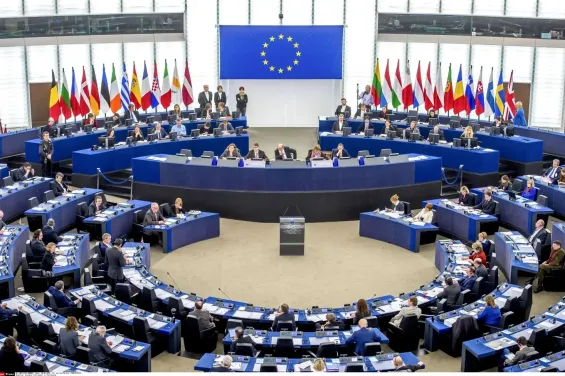
The labeling of products originating from specific regions, as outlined in the new agricultural agreement between Morocco and the European Union finalized on October 3, will remain unchanged. This decision was confirmed today during a plenary session of the European Parliament.
The draft resolution, introduced by two Members of the European Parliament (MEPs) from the European People's Party (EPP) Group, including Spanish MEP Carmen Crespo, failed to secure the necessary two-thirds majority required to urge the European Commission to suspend the labeling agreement with Rabat. The proposal received 359 votes in favor, 189 against, and 76 abstentions, falling short by just one vote.
The MEPs argued in their proposal that «the absence of an explicit, precise, and verifiable territorial reference for products originating from Western Sahara could facilitate unfair trading practices, undermine consumer and operator confidence, and weaken traceability as well as legal security in the Union market».
They also highlighted the Court of Justice of the European Union's (CJEU) stance, which specifies that «the territory of Western Sahara must be considered as a distinct customs territory for the purposes of Article 60 of the Customs Code (...) which can only designate Western Sahara as the origin».
On October 2, Morocco's Minister of Foreign Affairs, Nasser Bourita, emphasized that the agreement between Morocco and the EU «confirms the application of preferential tariffs granted by the EU under the Association Agreement with Morocco to the Southern Provinces». He praised the fact that «the conditions of access to the European market for products from the North will be applied to products from the Moroccan Sahara».
Last week, representatives from various parliamentary groups, spanning right-wing, left-wing, green, and far-right parties, called on the European Commission to designate Western Sahara as the origin of agricultural products from the region.
The rejection of this legislative proposal allows Morocco to look forward positively to the upcoming stages in its trade relations with the European Union.