


 chargement...


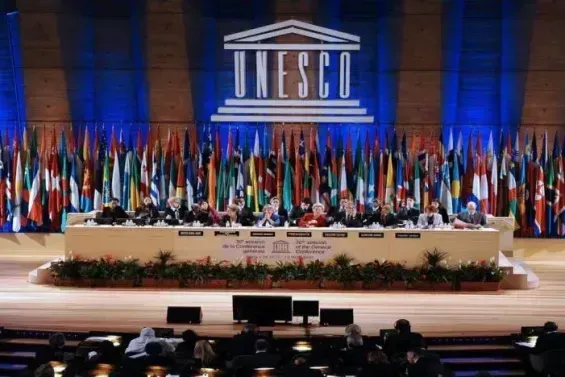
Over the past decade, Moroccan-Algerian disputes have expanded beyond political and economic tensions into a new, equally sensitive arena: culture and heritage. UNESCO, ideally a space for safeguarding shared human memory, has instead become a stage for repeated clashes between the two countries over the inscription of several tangible and intangible heritage elements, from couscous to Rai music and zellij tiles, culminating most recently in a heated debate over the caftan.
Cross-Border Heritage and Ongoing Disputes
Heritage, by its nature, does not recognize political borders and is not bound by the divisions inherited from the colonial era. It is the product of centuries of interaction, exchange, and coexistence among peoples. Yet this shared legacy has not prevented disputes between Morocco and Algeria within international organizations.
The story began in 2016, when Algeria independently submitted a request to UNESCO to register couscous as Algerian heritage. The move sparked tensions at the highest political levels, amplified by media narratives and social-media debates.
In late 2018, Algerian Prime Minister Ahmed Ouyahia accused Morocco of trying to «monopolize couscous and present it as its own dish», to which Mustapha El Khalfi, then spokesperson of the Moroccan government, responded that historical and cultural reality confirms couscous is Moroccan.
As disagreements escalated, the two countries eventually reached a compromise. In a rare example of cooperation, Algeria, Morocco, Mauritania, and Tunisia submitted a joint file to UNESCO that deliberately avoided specifying a single recipe to prevent further conflict. In 2020, couscous was officially registered under the names of the four countries on UNESCO’s list of the Intangible Cultural Heritage of Humanity.
That same year, Algeria also submitted Rai music, widely popular in both eastern Morocco and western Algeria, for inscription as Algerian intangible heritage. UNESCO approved the file in 2022.
Zellij Tiles: Separate Files and Mutual Accusations
In April 2024, Algeria announced the submission of a file titled «The Art of Architectural Decoration with Zellij, Port Glazed Ceramics: Knowledge and Skills Associated with It» for inscription under Algeria on UNESCO’s intangible heritage list.
Weeks later, Morocco’s Ministry of Youth, Culture, and Communication revealed its intention to nominate «The Art of Zellij of Fez and Tetouan» for UNESCO inscription as well.
The dispute over zellij had already surfaced earlier in 2022, when Adidas unveiled football jerseys for the Algerian national team featuring motifs inspired by zellij patterns. Morocco accused the company of appropriating Moroccan designs and issued a legal warning. Adidas responded that the design was merely inspired by zellij mosaic patterns and expressed «deep respect for the people and artisans of Morocco», regretting the controversy.
The Caftan: A Long Dispute Ends in Moroccan Victory
On December 4, 2024, Algeria submitted a file titled «The Festive Women’s Attire of Greater Eastern Algeria: Knowledge and Skills Related to Tailoring and Jewelry-Making – Qandoura and Melhfa», which included imagery of the Moroccan caftan. Morocco swiftly intervened to «block a new Algerian attempt to appropriate Moroccan intangible heritage», according to the Ministry of Culture.
Morocco filed an objection with UNESCO, arguing that the Algerian file improperly included the Moroccan caftan. The Intergovernmental Committee for the Safeguarding of the Intangible Cultural Heritage upheld Morocco’s objection and ordered the removal of the caftan image. The ministry noted that the decision confirmed «yet another instance of Algeria appropriating Moroccan heritage».
Days later, Morocco submitted its own nomination file for the Moroccan caftan. On December 10, 2025, UNESCO’s Intangible Heritage Committee officially approved the inscription, which the Moroccan Ministry of Culture described as «a culmination of the Kingdom’s efforts to preserve and promote its cultural heritage».
Morocco and Algeria Together
Despite recurring disputes, Morocco and Algeria often stand together in UNESCO decisions. They share inscriptions with other Arab countries on heritage elements such as henna traditions; metal engraving skills; and Arabic calligraphy practices. Morocco and Algeria are also jointly listed, along with Tunisia and Mauritania, on the shared inscription for couscous.
To date, Morocco has successfully registered 16 heritage elements with UNESCO, the first in 2008 and the most recent just yesterday. Algeria has registered 13 elements, the first in 2008 and the latest in 2024.