

 chargement...


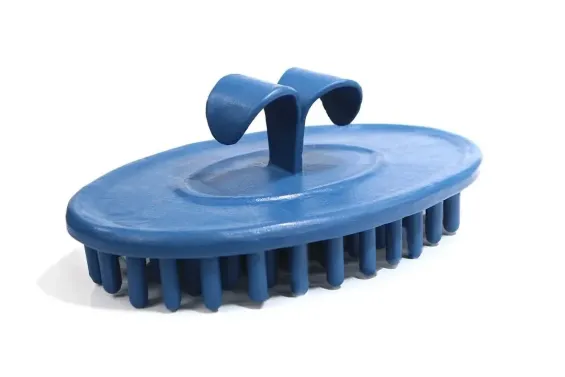
Have you ever had a dream where every household object was giant, a huge one-dirham plastic brush, an oversized jar, a gigantic Eurax ointment (or pomada sefra, as Moroccans like to call it), straight out of an Alice in Wonderland scene? Well, Mohammed Afechkou, a Tafraout-native chocolatier, has made that dream come true, except his objects are made of chocolate.
Born in Casablanca but raised in Oujda, Mohammed has been sharing these creations with Moroccans on social media: chocolate sculptures, as he calls them, pieces he makes from scratch, with dedication and years of learning, trial and error, patience, and consistency.
Self-taught pâtissier
Mohammed is the graduate of no baking school. His family, from the Souss, believes in work, lkhdemt in Tachelhit. That is why, in 2008, when he was still a middle school student, he joined his father at the bakery where he worked. «My father worked in a pastry shop, and I started working with him during summers and in my free time after school», Mohammed told Yabiladi.
.jpg)
From 2008 to 2014, he was his father’s right arm, going from post to post, but, by his own words, «a robot». «I wasn’t really fond of it; I just did what I was asked to do. It was mechanical».
For the following four years, Mohammed completely dropped baking, starting a new adventure after high school. A learn-it-yourself kind of person, he worked as a graphic designer, again, with no degree, just a quick-to-learn mentality and consistency. «At first I applied to be a translator at the same company, helping translate tourism content online. But I picked up graphic design and evolved», he shared.
From that work, Mohammed saved money, and found his way back to baking. This time, he took it seriously, with real passion and enthusiasm. That drive was reinforced by a job experience in Saudi Arabia. «I worked at a big pastry house. Unfortunately, I had a problem with the owner and returned home. But it was an enriching and fruitful experience, a big challenge», he acknowledged.
.jpg)
With that experience in hand, Mohammed decided to set up, in 2018, a workshop in Kenitra, an atelier, his little laboratory, where he started experimenting with chocolate for the first time.
«I’ve never learned from a chef, just books online», he stressed. Mohammed read and followed, experimented on his own, building on the basics he learned under his father’s guardianship.
Chocolate sculpture
But the «in-between» gigs helped too: graphic design, and spending too much time around builders, he joked. «I have that designer’s eye». he noted. «What helped too is our old house in my hometown of Tafraout, whenever we do renovation work, I’m the one who stays with the workers, watches them, and sometimes even gives them a hand. When I work with chocolate, I use their techniques because it’s like building: shapes and sizes».

What differentiates Mohammed from other chocolate sculptors is that he makes his sculptures from scratch: he conceives the idea, designs it, looks for ways to execute it, and then comes the fun part: melting the chocolate. No molds, he insisted.
«It’s easy to use molds, but I prefer to design from scratch and then execute. Even the few times I use molds, it’s only for basic shapes that support a bigger design», he noted.
With his chocolate sculptures, Mohammed wanted to pay tribute to Moroccan culture, our daily objects, things only Moroccans would relate to, recognize, and joke about. To do that, he melts tens of kilograms of chocolate. «The Moroccan brush and the Nokia phone weigh between 20 and 30 kilograms».

To show his work, he posts the process online, on a page he created dedicated to his craft. Pieces that aren’t sold are then destroyed and remelted, up to three times only, according to the recommended regulations. «After the third time, the chocolate is no longer edible because it loses its nutritional value».
And the same way he learned by himself online, Mohammed is now trying to pass it down to his 600 students. The chocolatier has been giving classes online for the last three years, tutorials recorded beforehand and explained to his online students, who come from all over the world.
«I have PDF documents, videos, and clips that show exactly and clearly how I’m working. They are tutorials, and students have the option to ask as many questions as they want, I answer and explain», he added.
%20%D8%AF%D9%88%D8%B2%D9%88%D8%A7%20%D8%A7%D9%84%D8%AA%D8%B5%D8%A7%D9%88%D8%B1%20%D8%A8%D8%A7%D8%B3%20%D8%AA%D8%B4%D9%88%D9%81%D9%88%D8%A7%20%E2%9C%85%E2%9C%85%E2%9C%85-%20%D8%AA%D8%B1%D9%88%D9%85%D8%A8%20%D9%84%D9%88%D9%8A%20%D9%87%D9%8A%20%D9%85%D9%86%20%D8%A7%D9%84%D8%AD%D9%84%D9%88%D9%8A%D8%A7%D8%AA%20%D8%A7%D9%84%D9%81%D8%B1%D9%86%D8%B3%D9%8A%D8%A9%20%D8%B7%D9%88%D9%86%D8%AF%D9%88%D9%86%D8%B3%20.jpg)
His classes span «cheesecakes, ice cream, viennoiserie, cake design, trompe-l'œil» and many other subfields in the sea that is pâtisserie. «The question I get all the time is: how do you do it online? It’s a hands-on field. The answer is that baking isn’t just about touching and experimenting. It’s also theory. I am the big example that one can learn how to bake online», he said.