

 chargement...


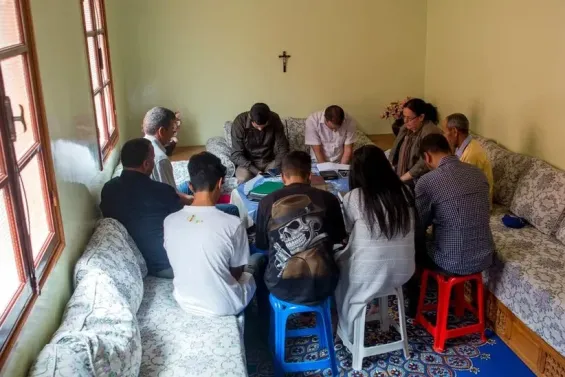
Morocco has recorded a slight improvement in its ranking in the World Watch List 2026, an annual report published by Open Doors that monitors levels of persecution or pressure faced by Christians in 50 countries worldwide.
In the 2026 edition, Morocco ranks 23rd globally, down from 21st the previous year. Higher rankings indicate more severe levels of persecution, while lower positions reflect reduced, but not eliminated, pressure. Morocco now ranks behind the Central African Republic (22), Mauritania (21), and Algeria (20).
Ongoing Surveillance of Moroccan Christians
The report highlights the complex challenges faced by Christians in Morocco, particularly converts from Islam, where family, social, and legal pressures often intersect. According to the report, «many face enforced isolation within their families», which can lead to expulsion from the home or exposure to physical and psychological violence. Social pressure is reportedly more intense in rural areas, sometimes resulting in job loss or forcing individuals to relocate.
From a security perspective, the report notes continued surveillance of Moroccan Christians, especially informal religious leaders, through summonses and interrogations by security services. While no legal proceedings were recorded during the reporting period, Open Doors says these practices have a deterrent effect, contribute to stigmatization, and push many Christians toward self-censorship in both religious practice and social interaction.
The report identifies Article 220 of the Penal Code, which criminalizes efforts to «shake the faith of a Muslim», as one of the main legal constraints on freedom of belief and religious expression. This provision places both Moroccan and foreign Christians at legal risk if they publicly express their faith or engage in activities perceived as proselytism.
Rural Areas Identified as Key Pressure Points
Special attention is given to women who have converted to Christianity, whom the report describes as the most vulnerable group. In rural areas, they face risks including arbitrary divorce, loss of child custody, house arrest, forced marriage, and restricted access to Christian religious materials.
Male converts also encounter family and social ostracism, such as the loss of financial support or inheritance, workplace pressure, and occasional short-term detention or interrogation, particularly when they are active in unofficial religious gatherings or seen as community leaders.
Geographically, most reported violations occur in rural zones, notably in northeastern Morocco, mountainous regions, and desert areas in the southeast. By contrast, converts tend to be concentrated in major cities, where pressure is relatively less severe, though still present.
The report also addresses the situation of foreign Christians, including those from Western and sub-Saharan African countries. While they generally enjoy greater freedom than Moroccan Christians, they remain under surveillance and may face deportation if suspected of proselytizing. Officially recognized churches are restricted to foreign worshippers and are located in major cities, while Moroccan Christians are barred from joining them or establishing their own places of worship.
The report concludes that Christianity continues to be perceived by parts of Moroccan society as a «foreign» religion, a view that, according to Open Doors, is used «to justify continued surveillance and restrictions». Despite constitutional guarantees of freedom of belief, the World Watch List 2026 finds that legal, social, and security barriers continue to impose multi-layered constraints on Christians in Morocco.
At the bottom of the ranking, Brunei places 50th, followed by Jordan (49th), Chad (48th), and Colombia (47th).