

 chargement...


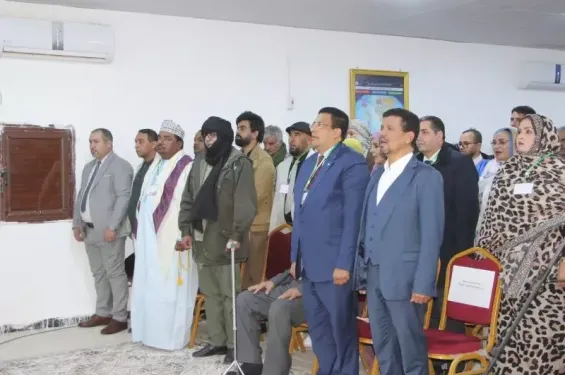
The Polisario Front organized the Arab International Conference for Solidarity with the Sahrawi People yesterday and today, in an apparent attempt to break its isolation within the Arab world. The event brought together senior figures from the Front, who took turns delivering speeches on the opening day, largely reiterating its long-standing narrative.
In his address, the Front’s so-called «foreign minister», Mohamed Yeslem Beissat, claimed that the conference «brings together various Arab actors, including ministers, diplomats, and writers, to create a comprehensive dynamic that unifies these different levels». In practice, however, no government officials attended the gathering, not even from Algeria, the Polisario’s main political backer.
He further argued that the conference would «strengthen the presence of the Sahrawi cause within Arab spheres of influence, laying the groundwork for unified Arab action on the Sahrawi issue».
Unlike previous editions, during which the Front claimed participation from delegations representing more than ten Arab countries, this year’s event acknowledged only the presence of politicians, researchers, activists, and media figures from Algeria, Egypt, Tunisia, Mauritania, Palestine, and Oman.
In its coverage of the conference, the Polisario highlighted the intervention of Popular Front for the Liberation of Palestine representative in Algeria Nader Al-Qaisi, known for positions aligned with Algeria, followed by speeches from Ismail Debesh of the Algerian Committee for Solidarity with the Sahrawi People and Algerian historian Mohamed Doumir. However, it did not specify the names or titles of participants from Oman, Mauritania, Tunisia, or Egypt.
Ongoing isolation
With the exception of Algeria and Mauritania, no Arab country recognizes the so-called «Sahrawi Arab Democratic Republic». Mauritania’s recognition dates back to a specific political context following a military coup in the late 1970s and has not resulted in full diplomatic relations or exchanges of official representation.
Syria severed ties with the Front following the fall of Bashar al-Assad’s regime. In May, and in the presence of Moroccan representatives, Damascus declared the separatist movement an undesirable entity and closed its office in the Syrian capital.
Conversely, most influential Arab states recognize Morocco’s sovereignty over the Sahara, with several having opened consulates in Dakhla and Laayoune. Arab countries, particularly those of the Gulf, have consistently supported Morocco’s position in international forums, notably at the United Nations.
These states have also worked to prevent the separatist Front from participating in joint Arab–African meetings. During the Arab-African Summit held in Equatorial Guinea, Morocco and eight Arab countries withdrew in protest over the presence of the Polisario banner.
The Arab League has previously urged its member states to adopt Morocco’s full territorial map in official meetings. In line with Morocco’s position, the League has also avoided addressing the Sahara issue in its forums, recognizing the exclusive role of the United Nations in handling the dispute.