


 chargement...


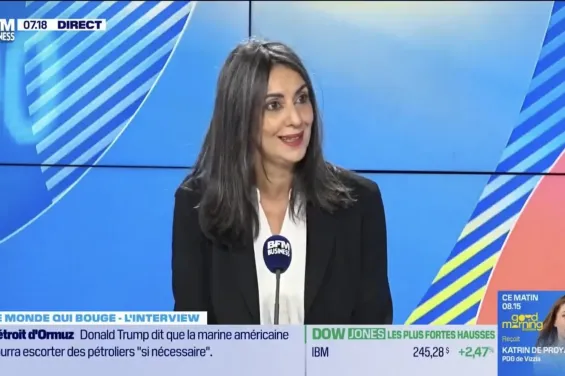
Minister of Economy and Finance Nadia Fettah Alaoui addressed the potential economic fallout of the conflict involving Iran, stating that Morocco is prepared to withstand any resulting shocks. «We are ready for potential impacts on our economy», she said during an appearance on BFM Business.
Iran: the financial impact on Morocco?
— BFM Business (@bfmbusiness) March 4, 2026
"Morocco regrets this crisis."
? Nadia Fettah Alaoui, Minister of Economy and Finance of Morocco pic.twitter.com/rGf7CJIAib
The minister emphasized that Morocco has, in recent years, «put in place protective mechanisms to support the most vulnerable populations and safeguard our economy».
«We have solid foreign exchange reserves, an increasingly green energy mix, and an economy that has proven its resilience. While we hope this crisis will be short-lived, we have an action plan in place», she added.
Fettah Alaoui acknowledged that the conflict has already had a direct impact on oil prices. Morocco’s 2026 Finance Law was based on an oil price assumption of $65 per barrel, while current prices are hovering around $85 per barrel.
Regarding gas, primarily used for domestic consumption, she noted that public finances would be able to absorb a price increase, «but we hope this will not be necessary in the long term».
In related developments, QatarEnergy, a major global liquefied natural gas (LNG) producer, announced on Monday, March 2, that it had suspended LNG production at its Ras Laffan Industrial City complex following a drone attack attributed to Iran. The site is one of the world’s largest LNG export hubs.
Meanwhile, any potential closure of the Strait of Hormuz by Iran’s Revolutionary Guards, a strategic maritime route through which nearly 20% of global oil supply passes, could significantly disrupt international energy markets.