


 chargement...


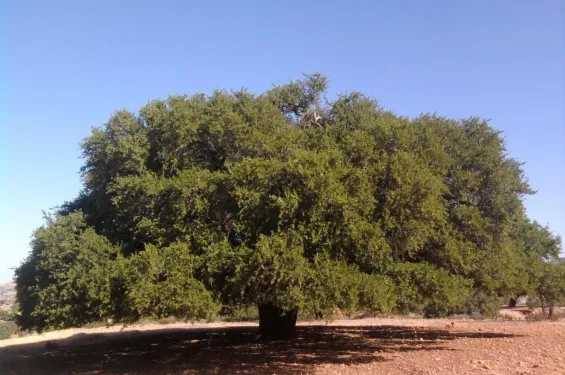
In a major scientific breakthrough, an international team of researchers has successfully produced the first high-quality reference genome for the Moroccan argan tree, marking an important step forward in understanding the genetic foundations of this unique species endemic to Morocco.
The study, published in the journal Nature, was conducted by researchers from the National Institute for Agricultural Research (INRA), in collaboration with Mohammed V University in Rabat, the International Center for Biosaline Agriculture in Dubai, the Center for Biotechnology and Genomics at Texas Tech University, and the International Center for Agricultural Research in the Dry Areas (ICARDA). The findings raise strong hopes for advancing conservation efforts and strengthening genetic improvement programs for the argan tree.
The research highlights that the argan tree (Argania spinosa), which grows in arid and semi-arid regions, is the only representative of the Sapotaceae family in North Africa. Its natural habitat stretches across the southern slopes of the High Atlas Mountains and the northern slopes of the Anti-Atlas Mountains in Morocco, an area recognized as a biosphere reserve by UNESCO.
The argan tree plays a vital social, economic, and environmental role in Morocco. Its fruits and byproducts provide food for both humans and livestock, while its seeds produce the globally prized argan oil. The tree also helps combat desertification and soil erosion, making it essential for the ecological balance of southwestern Morocco.
Despite its importance, natural argan forests have been steadily declining since the 19th century, due to factors such as climate change, population growth, and overexploitation. These pressures have significantly affected the tree’s ability to regenerate naturally.
Why decoding the argan tree genome matters
Developing a high-quality reference genome is crucial for understanding the argan tree’s genetic diversity, its ability to adapt to harsh environmental conditions, and the biological pathways responsible for oil production.
This genomic resource will support conservation strategies, improve breeding programs aimed at increasing productivity and resilience to environmental stress, and promote the sustainable management of this endemic Moroccan species. It also offers valuable insight into the evolutionary adaptations that have enabled the argan tree to survive in dry ecosystems.
The research could also support Morocco’s Green Generation 2020–2030 strategy, which aims to double argan oil production to 10,000 tons by 2030, develop 50,000 hectares of modern argan orchards, and rehabilitate 400,000 hectares of argan forests.
To conduct the study, researchers selected a model argan tree from the Taguert area near Tiznit, named «TAGUERTE (S7P2». They used advanced PacBio HiFi sequencing technology to generate long and highly accurate DNA reads, allowing them to overcome the complex and repetitive regions of the genome.
The team also employed Hi-C technology to analyze the three-dimensional structure of chromosomes and correctly assemble them, much like reconstructing a torn book, while RNA sequencing (RNA-seq) data from leaves, roots, and seeds helped identify active genes and improve gene prediction accuracy.
Researchers successfully assembled the genome in two separate phases, each representing a full set of 11 chromosomes. The genome measured approximately 621 megabases in the first phase and 615 megabases in the second, closely matching the previously estimated size of 645 megabases. The resulting genome sequence shows exceptionally high completeness and accuracy.
Overall, the study represents a major milestone in argan tree research, providing powerful tools to support its protection, development, and sustainable use, benefiting both Morocco’s local economy and its fragile ecosystems.