


 chargement...


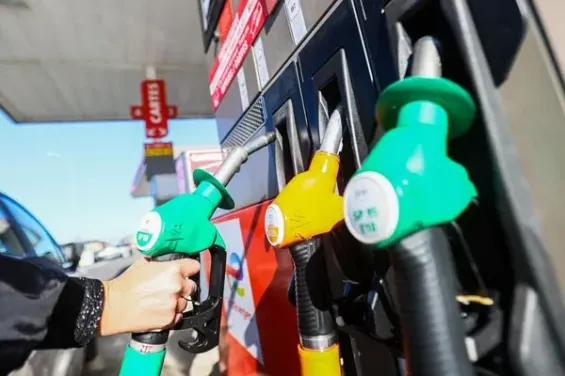
As April begins, fuel prices at the pump continue to rise in Morocco, amid tensions in the Middle East and volatility on international markets. Reda Nadifi, Secretary-General of the National Federation of Owners, Traders, and Managers of Service Stations in Morocco (FGNPS), told Yabiladi that the latest increase, between March 31 and April 1, 2026, affected both gasoline and diesel, with prices rising by approximately 1.55 and 1.70 dirhams, respectively.
This follows a previous increase between March 15 and 16, which also impacted gasoline (+1.50 DH) and diesel (+2 DH). As a result, pump prices now range between 15 and 16 dirhams per liter for gasoline and exceed 14 dirhams per liter for diesel, «with slight variations from one station to another», according to the sector representative. Since the liberalization of the sector in 2015, prices have been adjusted twice a month, based on international refined product prices and exchange rate fluctuations.
The role of distributors in price setting
In this context, the Competition Council has announced plans to strengthen market monitoring, aiming to prevent unjustified price coordination between distributors and ensure that global price decreases are more quickly reflected at the pump.
For his part, Nadifi said that ongoing dialogue between the Council and sector stakeholders «mainly focuses on the role of these players in the value chain, as an essential link but one that remains underrepresented in the strategic vision behind pricing structures and their determination, based on costs and margins».
He added that «in practice, prices are set by large distribution companies, even though we speak of liberalization». According to Nadifi, service station operators remain poorly informed about distributors’ profits and «share citizens’ concerns over price developments».
Several factors are at play, he said, pointing in particular to «opacity around information on stock levels and the real value of these operators’ profits».
«What we can say is that, as service station operators, our role is so limited that our level of information on these issues is the same as any other citizen exposed to the many rumors and speculations circulating, whether on social media or elsewhere.»
«We are subject to the same effects and share the same concerns as our fellow citizens», he added, stressing that «this price increase is far from benefiting service station managers».
«Our profit margin is higher per liter than as a percentage compared to large distributors. These increases are therefore unlikely to benefit us more than other players in the sales chain», Nadifi explained.
The Competition Council points to discrepancies
Amid what professionals describe as «opacity», the Competition Council has also identified discrepancies in how international price increases are passed on to consumers, particularly between diesel and gasoline.
In a note published Tuesday, the Council analyzed price movements between March 1 and 16, revealing that «despite the sustained rise in international quotations for refined diesel and gasoline», the transmission to pump prices in Morocco «appears to vary depending on the product».
For diesel, the increase in international prices «was not fully reflected in sales prices, with a significant gap of -0.89 DH/l», the Council noted. In contrast, for gasoline, the transmission «exceeded the international increase (+0.17 DH/l)».
The report further indicates that prices applied by operators to service station managers «varied, with differences reaching around 0.20 DH/l for diesel, or nearly 10% of the average increase observed», highlighting what it described as «price alignment behavior at the retail level».
The situation has prompted reactions from opposition lawmakers in Parliament. In March, several MPs questioned ministers and the head of government on the issue. More recently, the executive reassured that fuel stocks remain sufficient, covering 51 days for diesel and 55 days for gasoline.
Earlier, support measures for professional transport operators were also announced to mitigate the impact of rising prices. Since the end of February 2026, fuel prices have increased by nearly 30%.