


 chargement...


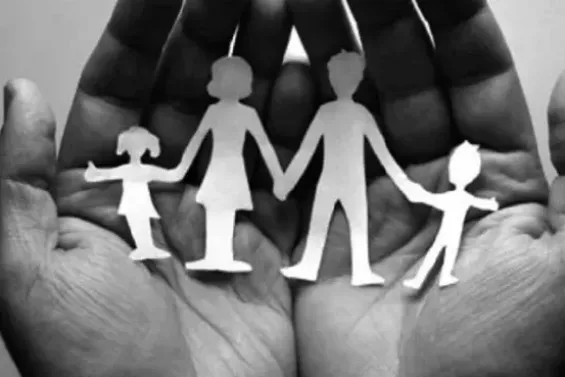
Over the past generation, Morocco’s family structure has undergone significant changes. While the family remains a central pillar of society, it has increasingly shifted toward a more nuclear model between 1995 and 2025, with smaller households and fewer multigenerational arrangements.
Released last week by the High Commission for Planning (HCP), the National Family Survey (NFS) highlights the impact of demographic shifts, describing a «progressive reshaping» of Moroccan families.
The data shows a clear contraction in household size, from 4.6 people in 2014 to 3.9 in 2024. It also points to a rise in female-headed households, increasing from 16.2% to 19.2%, alongside a marked aging of the population, with those aged 60 and over accounting for 13.8% in 2024, compared to 9.4% a decade earlier.
A growing share of couples without children is also evident, rising from 3.4% in 1995 to 9.4% in 2025. Meanwhile, 51.7% of single adults say they do not wish to marry, compared to 40.6% who do. By gender, 53.6% of women still view marriage positively, compared to just 31.5% of men.
A shift in perceptions
Commenting on these trends, sociologist Soumaya Naamane Guessous says they must be understood within the broader economic and social context. According to her, these developments are the continuation of long-term changes that began decades ago.
«When we observe rising singleness, we must remember that in the past, girls were married very young, sometimes at puberty, and boys shortly after», she explains. Today, the concept of adolescence, as well as longer education and greater autonomy, has pushed marriage to later ages.
«People now consider an ideal age for marriage that is higher than it was 30 years ago, around 27 for women and 31 for men», she adds, noting however that «marriage is still often perceived as an ideal by women».
This perception, she explains, is linked to how young women view love and marriage. «They want to choose their ideal partner. Over time, however, expectations may be lowered in a society where female singleness is still poorly perceived». This can lead to disillusionment and, in some cases, separation or divorce, often initiated by women.
Men, for their part, tend to marry later. «Marriage carries different social meanings: for women, it is often seen as a form of fulfillment, while for men it may represent a form of final commitment», she says. The rising cost of marriage, driven by social expectations and displays of status, is another key factor.
Economic and social pressures
Economic constraints also play a growing role. According to Guessous, the cost of raising children, particularly education, which can account for up to 60–70% of a household’s budget, has become a major concern.
«While poverty and low wages have long existed, more couples are choosing not to have children because they are less confident in the state’s ability to guarantee quality education», she says.
This uncertainty contributes to delayed marriages and decisions to have fewer, or no, children. Other factors, such as rising gold prices, which traditionally weigh on marriage expenses, further strain household budgets.
Beyond Morocco, broader global instability also shapes these choices. «The general atmosphere is marked by uncertainty, conflicts, rising prices, which creates a more connected but less secure world for young people», she notes.
Changing lifestyles also play a role. Spending on leisure, travel, and daily consumption has increased, adding to financial pressures. «In the past, having children was seen as a form of long-term support. Today, parents know they will need to support their children for longer», she explains.
Women taking on greater roles
These transformations are also reshaping gender roles. More women now aspire to a more balanced division of responsibilities within the household, an evolution that, according to Guessous, Moroccan society has yet to fully embrace.
«Men are beginning to contribute more to domestic tasks, but they remain a minority», she says. As a result, many women feel overburdened, leading to tensions within couples. Some men, she adds, may perceive these demands as a challenge to traditional notions of masculinity.
At the same time, women’s roles continue to expand. «Even those who do not work outside the home take on significant responsibilities», she notes. With the rise of nuclear families, many women no longer benefit from extended family support, making daily life more demanding, especially for those who are also employed.
According to Guessous, Moroccan society is moving toward modernity, but infrastructure and public services are struggling to keep pace. In this context, she stresses the need for public policies to better support these evolving family dynamics.