

 chargement...


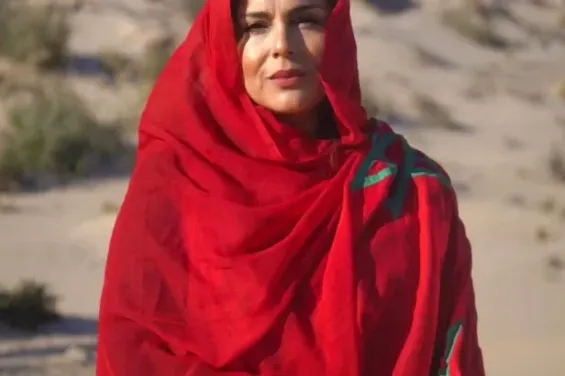
On April 23, the "Live Arts Studio" in Casablanca resonated with the vibrant sounds of the "Voices of Africa" concert, a gathering of Moroccan and African artists spearheaded by Sofia Mestari, a French artist of Moroccan descent. This initiative is not just about music; it’s a celebration of African unity, cultural diversity, and the spirit of solidarity.
The concert supported the association "Les Bonnes Œuvres du Cœur," which is dedicated to helping children with heart conditions in Morocco and across several African countries. The lineup featured an array of talent from across the continent, including Ahmed Soultan, Sanâa Kadmiri, Abir El Abed, Marema, and Cheikh Tijani Seydi.

Sofia Mestari, the visionary behind this artistic endeavor, expressed her enthusiasm in a conversation with Yabiladi, stating, «It's not just a musical concert; it's an entire continent, a single voice, and above all, one unified heart.»
Her First Steps Toward Art
Sofia Mestari's journey is rooted in her deep connection to her Moroccan heritage, using music as a bridge to unite African cultures. Born in Casablanca, she cherishes her childhood memories of Marrakech before moving to France when her parents sought educational opportunities for her sister.
Relocating to Paris marked a significant shift. Initially challenging, Mestari soon embraced the cultural richness of the French capital, finding solace and inspiration in its theaters, museums, and iconic architecture. She describes this transition as a transformation of her sense of uprooting into artistic openness.

Even before music, the stage was a familiar place for her. Spending two years in a tourist club where her father worked, she performed regularly, recalling, «I enjoyed singing in front of tourists. They were my first audience.»
Her Moroccan upbringing instilled in her the values of family, solidarity, and cooperation, elements that continue to shape her identity today.
At fourteen, Mestari's career took a decisive turn when she joined a cover band. After honing her skills for two years, her first concert at "Divan du Monde" in Paris opened new doors. Producers who saw her perform encouraged her to pursue a professional music career, leading to a contract with "Universal Music France."
Her career quickly gained momentum. At nineteen, she represented France in the "Eurovision" contest with the song "On aura le ciel," an experience she now describes as "almost surreal."
A Return with a New Spirit
The Eurovision selection took place at the iconic "Olympia" hall, with a jury led by Patrick Fiori and millions watching. Proud of her Moroccan roots, Mestari fondly recalls watching the show as a child in Morocco. She later performed in front of 23,000 spectators at the final in Sweden, in a venue graced by Janet Jackson just a week prior.

In Paris, Mestari continued her studies, earning a literary baccalaureate before enrolling in a documentation school with aspirations of becoming a notary. However, music gradually took precedence.
Her success led to albums, tours, and major concerts, sharing stages with renowned artists like Eros Ramazzotti, Florent Pagny, and Julien Clerc. She also appeared on major French television programs.
Alongside her artistic career, Mestari has been committed to community work. She became an ambassador for the "Rêves" association, alongside Vanessa Paradis and Johnny Hallyday, and also supported the "Fight Aids" foundation led by Stéphanie de Monaco.
Her dedication to social causes remains strong. She is an ambassador for the "Enfants du désert" association in the Errachidia region, supports "Baraka Angels" for children in mountainous areas, and leads her own association, "Musique et Culture Sans Frontières."
Whether it's healthcare, education, or any initiative that brings joy to children's hearts, this is a commitment I hold dear, and it is of great importance to me. Music has "three powers": unification, awareness, and message transmission.
Over time, Mestari began to seek new challenges. She explains, «At a certain point, I felt that I had done almost everything in Europe.» This realization led her back to her roots, her country, and her continent. She proudly states, «It's a return to the basics, to the family trunk, and to true rootedness.»
Community Work at the Heart of Her Journey
This return gained significance in 2020 when she performed in Abidjan for the "Children of Africa" foundation. Supported by the Moroccan Embassy and Moroccan companies in Côte d'Ivoire, the event funded 12,000 school bags for Ivorian students.
This experience marked a turning point, as Mestari's music began to reflect a deeper connection to Africa. Since then, she has collaborated with artists like DJ Van, producing tracks such as "Africa," a tribute to Morocco and the continent, blending modern rhythms with traditional instruments like the "kora." She is also working on a trio project with Ahmed Soultan and Lokua Kanza.
Through "Voices of Africa," Mestari aims to establish the concert as an annual traveling event, bringing it to different cities each year. She states, «The goal is always to lend a helping hand, provide a platform for deserving young people, and create spaces where cultural exchange and discovery become possible.»