


 chargement...


Low female participation in the labor market, the persistence of informal employment, and rapid demographic aging are putting increasing pressure on Morocco’s long-term social protection ambitions, according to a new prospective report by the High Commission for Planning (HCP).
Based on the results of the 2024 General Population and Housing Census, the study argues that these three dynamics form a «system of cumulative inequalities» that gradually weakens the country’s contribution base, pensions system, and intergenerational solidarity mechanisms.
Weak female participation
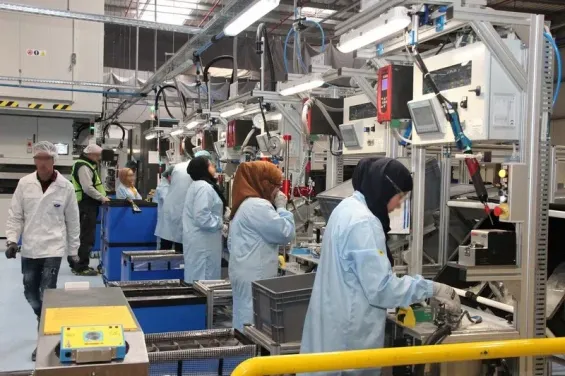
The report identifies women’s economic participation as one of the country’s main structural weaknesses. In 2024, the female participation rate stood at just 19.1%, compared with 68.6% for men, placing Morocco among the countries with the lowest female labor participation rates in the middle-income world.
Even when women are employed, the majority remain outside the formal economy. Around 70% of working women are employed under informal conditions, compared with 76.9% of men. However, the report notes that women are disproportionately concentrated in unpaid family work and non-contributory activities, while men are more likely to hold income-generating informal jobs or work as self-employed laborers.
This low economic inclusion of women «reduces the contribution base by accentuating gender asymmetries», the study states.
According to the report, these inequalities accumulate throughout working life before resurfacing at retirement age in the form of deep pension gaps. Only 15% of women aged 60 and over currently receive an effective pension, compared with 37% of men.
In 2020, the female-to-male pension ratio stood at just 11.1%, meaning women’s pensions were on average nearly nine times lower than those of men.
The report also highlights sharp inequalities among women themselves depending on education levels. Under integrated reform scenarios, women with tertiary education see unemployment decline by 5.3 percentage points by 2070, while women with no diploma or only primary and lower-secondary education experience increases of 5 and 7.1 points respectively.
The study further estimates that, without targeted reforms, the female participation rate would rise only marginally over the next 50 years, from 22.8% to 26.2%.
Informality continues to weaken the contribution base
Alongside low female participation, the report identifies informality as another major structural obstacle. Informal employment still accounts for more than three-quarters of total employment in Morocco and involves more than two million production units, concentrating widespread precariousness and persistent gaps in social security coverage.
According to the study, informality is not simply a divide between formal and informal work, but a structural system that weakens the country’s contribution base and limits the effectiveness of social protection reforms.
The report’s simulations show that reforms often solve one imbalance while worsening another. For example, increasing female labor participation generates the largest rise in women’s employment, with a gain of six percentage points. However, more than two-thirds of the newly created jobs end up in the informal sector, while female unemployment rises by 6.2 points and formalization declines by 8.3 points.
Similarly, education-focused reforms improve women’s formalization rates by 3.6 points, but also increase unemployment because the formal economy lacks the capacity to absorb the influx of graduates.
The study also cautions against relying solely on coercive anti-informality measures. Simulations suggest that sanctions aimed at reducing informal work, if implemented without simultaneously expanding the formal economy, could shrink employment and increase unemployment instead of generating productive gains.
Aging population expected to reshape social balances
At the same time, Morocco is undergoing a rapid demographic transition that is expected to further strain the country’s social and financial balances.
The proportion of Moroccans aged 60 and over is projected to rise from 9.4% in 2014 to 23.2% by 2050. Meanwhile, the old-age dependency ratio, currently around 20%, is expected to reach 39.4% by 2050, surpassing the dependency ratio of younger populations.
According to the report, these demographic changes will place growing pressure on pensions, public finances, and family solidarity systems.
Longer life expectancy, the study notes, is transforming «past accumulation deficits into growing future commitments for public finances and family solidarity mechanisms». Although younger generations show signs of gradual catch-up, the report says this convergence is approaching a «structural ceiling».
The report concludes that isolated measures will not be enough to address inequalities linked to low female participation, informality, and demographic aging. Instead, it calls for coordinated reforms combining the expansion of formal labor demand, improved labor-market matching, educational restructuring, and stronger policies encouraging women’s participation in the economy.