


 chargement...


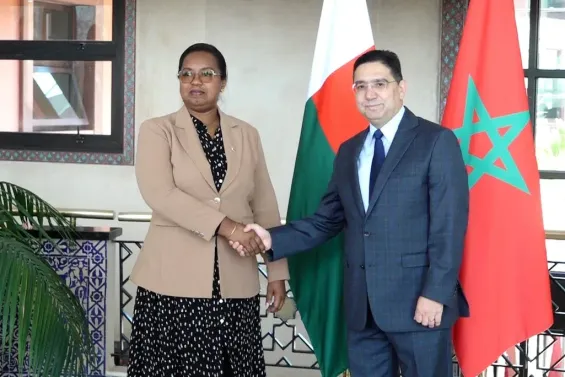
Buoyed by an increasingly assertive diplomatic push, Morocco continues to consolidate international support for its sovereignty over the Sahara and for its autonomy plan. In recent days, several African, American, and Asian countries have reaffirmed their backing for Rabat’s position.
The meetings held by Foreign Minister Nasser Bourita with several counterparts on the sidelines of the second Ministerial Conference on Peacekeeping in Francophone Environments, held on May 20 in Rabat, reflected this momentum. Other bilateral talks also gave a number of states the opportunity to reiterate their support for Morocco’s stance on the Sahara issue.
Following these discussions, several African and American countries renewed their support for Morocco’s territorial integrity and for the autonomy plan proposed by Rabat as a solution to the dispute. They also praised the South-South cooperation initiatives launched by King Mohammed VI.
Joint statements issued after Bourita’s meetings with the foreign ministers of Côte d’Ivoire, Chad, Guinea, Haiti, Dominica, and Panama confirmed this trend. All of these countries are longstanding supporters of Morocco’s position on the Sahara.
Morocco deepens diplomatic gains in Southern Africa
Among the diplomatic gains recorded this week, the one secured with Madagascar stands out in particular. On Tuesday in Rabat, Madagascar’s new authorities, in power since last October, expressed support for Morocco’s territorial integrity.
The position was outlined by Madagascar’s foreign minister, Alice N’Diaye, who has held office since March 26, in a joint statement issued following her meeting with Nasser Bourita.
The development marks a continuation of the position adopted under former president Andry Rajoelina, whose government had already backed Morocco’s autonomy plan before he was overthrown by the military on October 14, 2025, after protests led by members of Generation Z.
Madagascar’s support carries added significance as it comes from Southern Africa, a region widely regarded as South Africa’s sphere of influence and home to the Polisario Front’s main ally on the continent.
In the region, Morocco already enjoys the backing of Zambia, Eswatini, the Democratic Republic of the Congo, Malawi, and the Comoros. These countries have also opened consulates in Dakhla or Laâyoune, formalizing their support for Morocco’s sovereignty over the Sahara.
Across the rest of Southern Africa, however, diplomatic positions remain more mixed. Some countries continue to maintain a neutral stance or support the United Nations-led process. The regional landscape remains fragmented, with positions often shaped by historical considerations and internal balances within the African Union.
This steady accumulation of bilateral support forms part of a broader strategy aimed not only at securing new backing, but also at consolidating and making visible the support Morocco has already built across different regions of the world.