


 chargement...


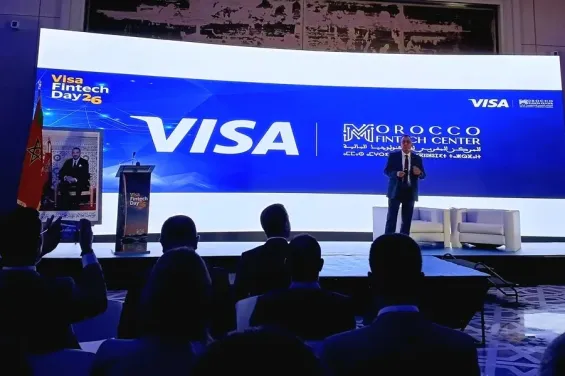
At a time of rapid transformation, Morocco’s fintech sector is now the subject of its first comprehensive overview. Unveiled on Tuesday in Rabat by the Morocco FinTech Center (MFC) in partnership with Visa, the country’s first fintech White Paper was presented during Visa Fintech Day 2026. The report identifies the sector’s structural challenges and outlines strategic priorities to support its development.
Speaking to Yabiladi, MFC Executive Director Hicham Lahlali said the White Paper aims to «lay the foundations for a vision serving the future of fintech in Morocco», a sector that now comprises nearly 60 active companies, mainly focused on payment solutions and business services.
«Above all, this paper reflects a collective ambition to build a more structured, more competitive sector with a stronger international outlook. The objective is twofold: to provide a structured overview of the national ecosystem and to identify the main levers for acceleration in the years ahead.»
According to Lahlali, «this work confirms that Morocco today has all the fundamentals needed to accelerate its development in this field: institutional commitment, engaged regulators and high-quality talent». However, he noted that the Kingdom still lags behind several African leaders, including Nigeria, South Africa, Egypt and Kenya, in terms of scale and market volume.
«But what we have tried to show through this first White Paper is that Morocco has a major asset in its institutional maturity, which will certainly enable us to close this gap and accelerate its development.»

A first comprehensive overview
The foundations of the White Paper were laid as Morocco’s fintech ecosystem gradually began to take shape. In 2023, Bank Al-Maghrib launched the Morocco Fintech Landscape study with support from the World Bank and the participation of financial regulators AMMC and ACAPS. The study drew on extensive consultations with fintech startups, financial institutions and public stakeholders.
According to the White Paper, the study revealed an ecosystem that is already dynamic and innovation-driven, although still at an early stage of development, with a limited number of large-scale startups and a relatively modest deal flow. It recommended establishing a central governance framework, strengthening operational foundations through initiatives such as Open Finance, and expanding support and financing mechanisms to help fintech projects emerge and scale.
The MFC was created in this context and subsequently developed the White Paper with Visa. The publication aims to provide both a broad overview of the ecosystem and an in-depth analysis of its dynamics, achievements and remaining challenges, whether regulatory, technological, financial or related to talent development. It also highlights Morocco’s opportunities for growth and regional positioning.
Structuring challenges, but strong potential
During the presentation, Lahlali said the project followed an inclusive and collaborative approach involving numerous fintech companies, helping stakeholders identify priorities and build a shared vision for the sector. He stressed that the goal is not merely to create fintech companies, but to help them grow and compete at both regional and continental levels.

The White Paper highlights regulatory challenges and calls for more flexible business models capable of keeping pace with evolving user expectations. Lahlali also pointed to initiatives launched by the Ministry of Digital Transition and Administrative Reform, alongside other public institutions, to support startups, open banking and open finance through interoperable systems and improved technological infrastructure.
For the MFC, the objective is to serve as a one-stop shop for fintech companies, facilitate their interaction with the broader ecosystem, and support their growth through partnerships, market opportunities and acceleration programs. The long-term ambition, Lahlali said, is to build a sovereign fintech sector capable of delivering innovative, secure and resilient solutions while strengthening connections between local and international players.