

 chargement...


The latest session of the United Nations Committee of 24 (C24), held from June 15 to 26 in New York, once again provided a platform for opposing Moroccan and Algerian positions on the Sahara issue.
Speaking before the committee, Algeria’s permanent representative to the United Nations, Amar Benjamaa, reiterated his country’s stance, describing the Sahara issue as a «matter of decolonization that the international community must complete».
The Algerian diplomat noted that the issue has been on the C24 agenda since the 1960s, without mentioning that it was Morocco that first brought the matter before the United Nations.
Indeed, well before Algeria gained independence in 1962 and before the Polisario Front was founded in 1973, the first meeting of the Committee of 24 held outside New York took place in Tangier in May 1962. The meeting led to the inclusion of the Sahara issue on the committee’s agenda in 1963, at Morocco’s initiative.
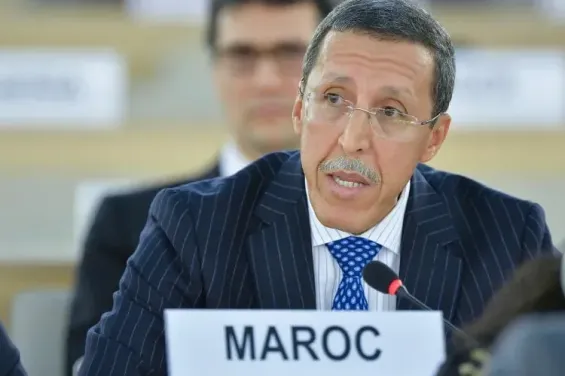
Responding to the Algerian representative, Morocco’s permanent representative to the UN, Omar Hilale, said: «To those who persist in presenting the Moroccan Sahara as a question of decolonization, Morocco replies that their reading is outdated, even obsolete.»
Trump's mediation efforts in the background
Hilale also argued that «the decolonization process of the Sahara was completed with its irreversible return to its motherland, the Kingdom of Morocco, in 1975». Rejecting Algeria’s position, he stated that «there is neither an administering Power nor the characteristics of a non-self-governing territory, but rather a regional conflict fueled and sustained from outside».
The Moroccan ambassador reiterated Rabat’s call for the Sahara issue to be removed from the agenda of the Committee of 24, a position he had already expressed during the committee’s meeting in Managua in May. In this regard, he pointed to the adoption of UN Security Council Resolution 2797 on October 31, 2025, describing it as a major turning point and a «roadmap to definitively close this dispute».
Notably, the exchanges in New York were less confrontational than the often heated verbal clashes that usually characterize Moroccan-Algerian discussions on the Sahara at international forums. While both sides firmly defended their positions, neither resorted to direct accusations. Morocco, for example, did not raise the issue of self-determination for Kabylia or human rights concerns in Algeria in response to Benjamaa’s references to «the self-determination of the Sahrawi people».
«Even before the first round of discussions on the Sahara held in February at the U.S. Embassy in Madrid, the American mediator had called for a minimum degree of restraint from Morocco and Algeria in order to encourage the resumption of political dialogue. So far, both parties appear to be respecting that request», a source familiar with the matter told Yabiladi.