


 chargement...


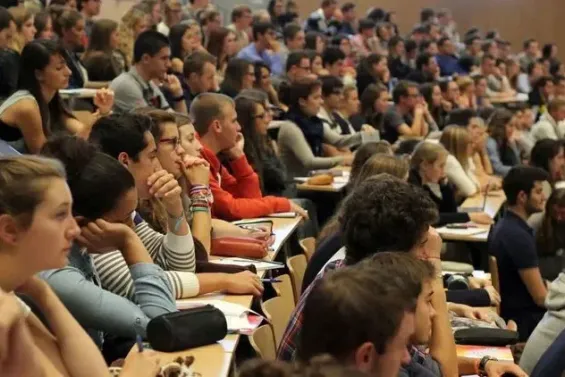
«We often forget that there are two very different student realities,» says Lara, a student in Montpellier who moved from Marrakech. Gaining admission is often only the first step. Once the visa has been secured and accommodation found, another reality sets in: the cost of living, administrative hurdles, loneliness and, in some cases, the need to work while studying.
On paper, they are all Moroccan students in France. Yet their experiences reveal striking differences. For Lara, 21, the move to France took place under relatively favorable circumstances. A French-Moroccan graduate of a French high school in Marrakech, she acknowledges that her background helped her navigate the process with greater ease. Her admission went smoothly, thanks in part to her educational path and the opportunities available to her in France.
«Without my parents’ help, it would be complicated»
Even with those advantages, not everything came easily. From the outset, finding accommodation proved to be one of the biggest challenges. Securing an apartment in Montpellier from abroad was difficult due to landlords’ requirements. Her family ultimately had to rely on a specialized agency, an effective but costly solution that she says she could not have «managed on her own».
Aymen, 21, who is pursuing a bachelor’s degree in economics and management in Angers, also benefited from strong family support. It is a reality he readily acknowledges.
«Without my parents’ financial help and the experience of my older brothers, who had already gone through the process in France, it would have been complicated,» he says.
That support allows him to focus entirely on his studies without having to take on a job. Yet it also brings a different kind of pressure: the obligation to succeed in return for the sacrifices made on his behalf.
«They did everything they could for me to succeed, so I have to succeed,» he says.
For both Lara and Aymen, family support serves as a financial and emotional safety net. It does not eliminate the pressure, but it provides a level of stability that many other students lack. For some Moroccan students, the struggle begins long before they enter a lecture hall.
Studying, working, holding on
Before questions of housing, integration or academic success even arise, many Moroccan students face a first major obstacle: finances.
Applicants must generally prove they have around 85,000 dirhams, nearly €8,500, in available funds when applying for a student visa. While it is an administrative requirement, it also acts as an initial social filter, often a decisive one.
For Anas, 21, from Guercif and now studying finance in Angers, that reality became apparent very early on. After attending an engineering school in Tangier and later the ENCG in Fez, he managed to gain admission into the third year of a bachelor’s programme in France, an opportunity he knows is far from common.
But for him, the real challenge was not academic. «I was lucky to be accepted, but the difficulties come afterward,» he says.
The biggest hurdle, he explains, was gathering the funds required for the visa.
«Without my parents at the start, without that blocked amount of money, I would never have been able to get my visa, and therefore never would have been able to come to France.»
Since arriving in Angers in September, he has been working in the restaurant industry to cover his expenses and gain financial independence.
«I work to fully support myself and finance my studies, even if the pace is sometimes tough.»
«Today, I work to survive»
Amine knows that pursuit of independence all too well, but in a far more demanding form.
Now 28 and living in Montpellier, he has spent the past five years accumulating degrees. A graduate of ISMAC in Morocco in audiovisual media and cinema, he continued his studies in France and is now beginning a second master’s degree.
From the outside, his path might appear to be one of steady progress. The reality, however, is much harsher.
His departure was initially constrained by financial difficulties. Raising the money required for his visa proved to be a major challenge. He eventually managed to gather the necessary funds, but only by taking on debt from the very beginning.
Since then, working has no longer been a choice, it has become a necessity. «Today, I don’t work to live, I work to survive,» he says.
Amine juggles classes, an internship and a night job. «Most of the time, I work nights, from 10:45 p.m. to 6 a.m., before going straight to class at 8 a.m., not counting the one-hour commute to my school.»
On some days, sleep becomes a luxury. He says there are nights when he manages no more than 30 minutes of rest.
Behind the idealized image of studying abroad, his daily life has become what he describes as a «battle that will only end once I have a salaried job».
For him, stability can only come through employment, regardless of the physical toll.
While all of these students share the same ambition to succeed, they do not start from the same place. Behind the promise of opportunity often associated with international study, deep inequalities continue to shape the experience of Moroccan students in France.