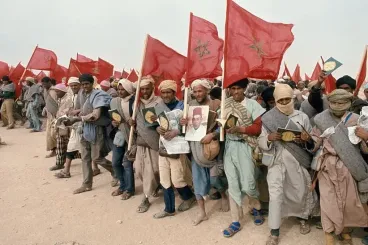
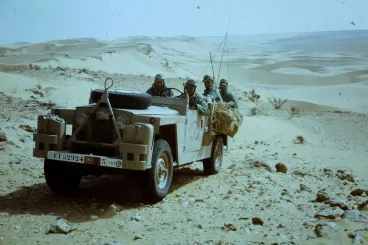
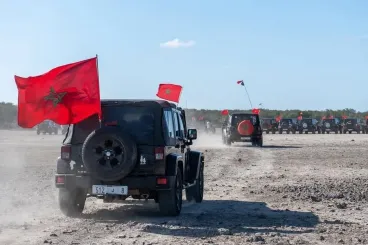
As the date of the Green March in 1975 approached, the Sahara was on the brink of becoming a potential battlefield. While tens of thousands of Moroccans were preparing to cross the borders in a peaceful march, the Spanish military leadership was devising a strict defensive plan called «Operation Marabunta» to defend to the end the city of Laayoune.
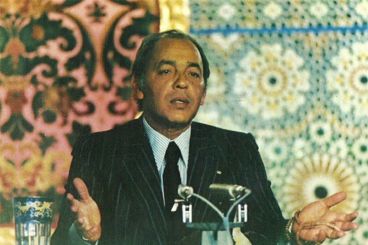
During the reign of Hassan II, the Green March was a turning point in history of the Moroccan political scene. The initiative, announced on the 16th of October 1975, had clearly strengthened the sovereign’s power. Consequently, the opposition in the country offered to engage in the democratic process by abandoning the armed struggle.
After the attempted coup in July 1971, Hassan II became suspicious of the Americans to the point that CIA agents in Morocco were unaware of the Green March project. A State Department document states that Henry Kissinger, the former United States Secretary of State, was certain that the king was planning an attack against the Sahara controlled at the time by the Spanish. Kissinger shared the information with the Spanish Minister of Foreign Affairs.
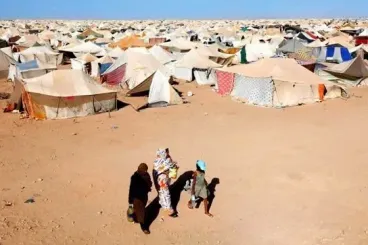
Algeria officially opened its territory to «Sahrawi refugees» fleeing «Moroccan occupation» only after the Green March. But this narrative is challenged by historical facts, documented by the United Nations. It’s time to revisit a forgotten chapter of the Western Sahara conflict.
 Les articles les plus...









 chargement...