A new international study reveals that Morocco’s remote Oudiksou Basin holds one of Africa’s best-preserved records of the period surrounding the dinosaur extinction, capturing a rare transition from marine to continental environments. The site contains fossils of sharks, mammals, and dinosaurs, making it a key location for understanding how ecosystems changed before and after the K–Pg extinction event.
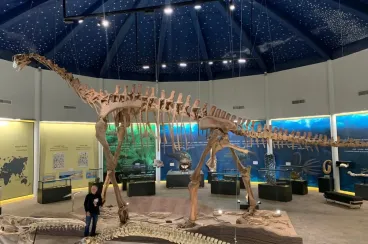
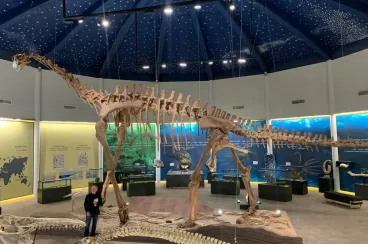
Morocco, often called a geologist’s paradise, holds some of the world’s most remarkable dinosaur fossils, from the Spinosaurus and Atlasaurus to the Anza footprints. Yet, despite this wealth, only a few museums strive to make this prehistoric heritage accessible to the public.
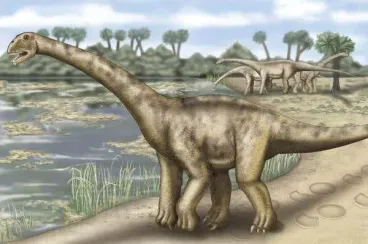
In a remarkable scientific achievement, an international team of researchers has discovered fossilized teeth of Turiasauria dinosaurs in Morocco’s Middle Atlas Mountains, dating back to the Middle Jurassic period, around 168 million years ago. This finding represents the oldest known evidence of this group of giant dinosaurs on the African mainland.
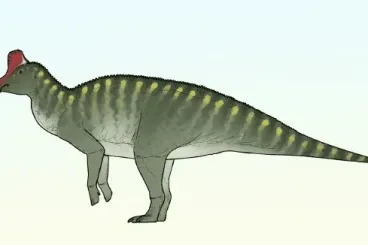
A new hadrosaurid dinosaur species, Taleta taleta, was discovered in Morocco’s Ouled Abdoun Basin, providing evidence that duckbill dinosaurs spread from Europe to North Africa around 66 million years ago. This finding highlights the region’s diverse dinosaur fauna and its unique geological history during the late Cretaceous.
A new study reveals that fossils found in Morocco's El Mers III Formation are the oldest known Cerapodan dinosaurs, dating back to the Middle Jurassic, around 163 to 174 million years ago. This discovery helps shed light on the evolution of Cerapodans and their rise as dominant plant-eaters in the Northern Hemisphere.
A new study suggests that the earliest dinosaurs originated in the supercontinent Gondwana, which comprised southern Morocco. These findings challenge previous assumptions, pointing to gaps in the fossil record and potentially rewriting the history of dinosaur evolution.
Similar tracks of Allosaurus and Torvosaurus discovered in Morocco, Switzerland, Portugal and Spain suggest that dinosaurs had migratory routes between Gondwana and Laurasia.
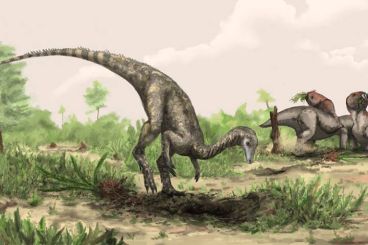
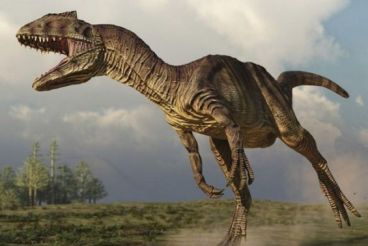
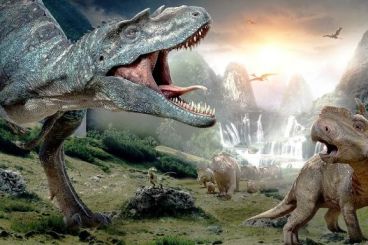
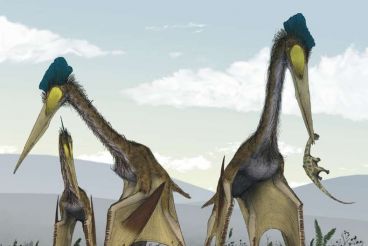
During the prehistoric era, many dinosaurs roamed, swam and flew over Morocco. The giant reptiles were different, unique-looking and fascinating. Discover four of Morocco’s most bizarre-looking dinosaurs.
Pterosaurs fossils found in northern Morocco are in the heart of a new discovery. A recent study suggests that these flying reptiles were still going strong during the Cretaceous period, contrary to past discoveries.
 Les articles les plus...









 chargement...