


 chargement...


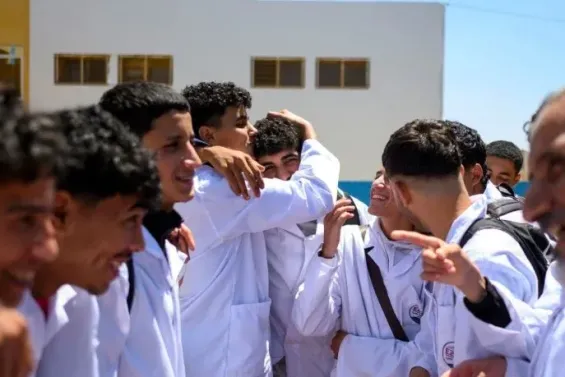
No, Moroccan youth have not turned their backs on citizenship. That’s the clear message from the report «How Do Young People View Civic Engagement?», presented Thursday, July 17, by the association Les Citoyens. Over the past year, the team traveled across all 12 regions of Morocco, holding 49 meetings in cafés, neighborhoods, and villages. During this time, more than 1,100 young people spoke up to share their views on civic life. And their message is consistent: they want to participate, but don’t know where they fit in.
«We do a lot, but no one sees it», says one young participant at a Citizen Café, a quote that captures the prevailing feeling, especially among youth from rural areas. The farther they live from urban centers, the stronger the need to be heard. Physical distance often leads to institutional disconnect, yet the desire to engage remains strong.
In general, these young people want to take action, but they’re held back by indifference from officials, overly complex procedures, and a lack of awareness about how to get involved.
.jpg) Basma Guidani, Ambassador Mentor Casablanca Settat ©DR
Basma Guidani, Ambassador Mentor Casablanca Settat ©DR
Invisible but Real Forms of Engagement
Beneath the surface of what may appear as disinterest, a new form of engagement is taking shape: more informal, hyper-local, and often spontaneous. Clean-up drives, awareness videos, helping families in need, cultural or environmental initiatives, such efforts are quietly multiplying in neighborhoods across the country, led by youth working with few resources and no formal structure.
In cities like Casablanca or Nador, and in remote communes, some groups gather in neighborhood cafés after hours, borrowing a corner of the room. They pool their pocket money, get creative with what they have, and launch small-scale projects with real local impact.
«They’re full of ideas, they create, they act, but their work remains in the shadows», said Basma Guidani, the project’s ambassador, during a press briefing in Casablanca. «They’re not asking for much, just a little recognition and simple, accessible funding to support their community work».
According to the report, 72% of surveyed youth see civil society and associations as meaningful avenues for engagement. Yet very few know their civic rights or the tools the Constitution offers to participate in public life. Many are unaware they can submit petitions or proposals to their municipal council, and for those who try, the bureaucratic hurdles often discourage them.
A Deep Mistrust in Institutions
One striking figure: 70% of young people surveyed said they do not trust elected officials. This isn’t about rejecting politics, it’s a genuine crisis of confidence. They recount consultations that lead nowhere, promises left unfulfilled, and a pervasive feeling of being ignored.
«Our voice doesn’t change anything», many said. These words reflect the deep disconnect between institutions and a generation eager to be heard. What they want is to be guided, informed and above all treated as partners. Yet 48% rated existing participatory mechanisms just 1 or 2 out of 5. Meanwhile, 75% believe they need training in civic rights, law, or public speaking to get properly involved.

Concrete Paths Toward a More Participatory Democracy
The Les Citoyens report doesn’t stop at diagnosis, it offers concrete, youth-informed recommendations for building a more inclusive democracy. Among the proposals :
- Reactivate youth consultative commissions in local and regional councils, many of which are dormant.
- Create regional funds for informal grassroots initiatives, with simplified criteria (applications in Darija, short videos, etc.).
- Transform youth centers into civic action hubs that host debates, trainings, project clubs, and citizen cafés.
- Launch a multilingual mobile platform (in Darija, Amazigh, and Arabic) where youth can submit ideas, support petitions, and access civic tools.
- Introduce participatory youth budgets in every region, allowing young people to vote on community projects.
- Run an annual national campaign, «Youth Change Morocco», to promote engagement on public media, social platforms, and local radio.
Another solution discussed during the press briefing: the integration of an active citizenship module into the school curriculum, starting at the middle school level. This module would be based on participatory methods such as field visits, role-playing, and citizen clubs.
The report also emphasizes the importance of digital engagement. While young people are highly present online, public platforms are often poorly adapted to their needs. One in two young people does not sign online petitions due to poor usability, lack of clarity, or simply the absence of a response. It is time, the study says, to treat e-participation as a full-fledged political space.
A Clear-Eyed Youth, Ready to Act If Given the Chance
This report is both a warning and a call to action. It sends a strong message to decision-makers: Moroccan youth are not apolitical, they are discouraged. They don’t just want to be «raised awareness of»; they want to be listened to, involved, and genuinely given a seat at the table. To achieve this, the dialogue between youth and political leaders must be rebuilt to restore trust, expand their space for expression, and give them real power to act.
.jpg)
This sociological study aims to amplify the voice of youth and calls on politicians to rethink citizenship, making it more locally rooted and more aligned with the realities on the ground.
Age group : Majority aged 19–34 (80.5%), with a minority under 18 (6.1%) or over 35 (13.4%)
Gender: Balanced representation — 48% women and 52% men
Professional status: Students: 55%
Private sector employees: 15.6%
Civil servants: 13.6%
Entrepreneurs: 6%
Other statuses: 9.8%