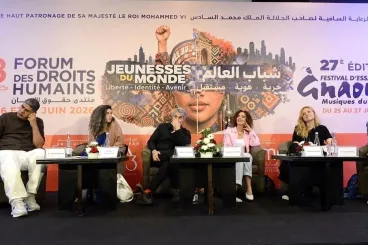
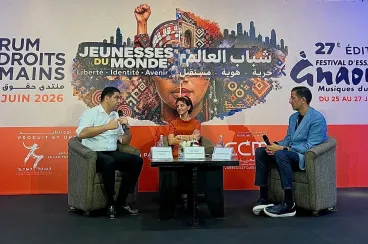
How does one grow up between several languages, several countries and several senses of belonging without being forced to choose? On the second day of the Essaouira Human Rights Forum, writers, philosophers, an anthropologist, researchers and artists were less concerned with defining identity than with setting it back in motion. It was a rich conversation, touching on migration, desire, storytelling and freedom.
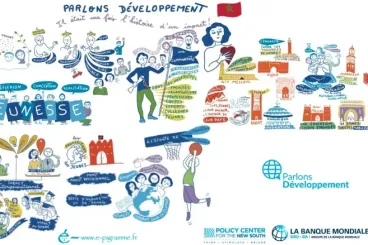
In Essaouira, the Human Rights Forum, the intellectual extension of the Gnaoua Festival, opened its 13th edition by placing young people at the heart of the debate. Often portrayed as disengaged or disillusioned, they emerged over the course of the discussions as a generation inventing new forms of expression, transmission and commitment. Artists, writers, sociologists, filmmakers, craftspeople, poets and political leaders all pointed to the same conclusion: the younger generation no longer
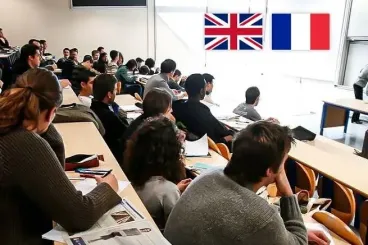
Long the language of reference in Morocco, French appears to be gradually losing ground to English, the international language par excellence, particularly among young people. In universities, on social media and in the professional world, this shift is also reshaping ties between young Moroccans at home and Moroccans living abroad (MRE).
The World Health Organization has warned about the rapid global expansion of nicotine pouches targeting young people. In Morocco, discreet use, flavored varieties, and social media promotion are finding fertile ground among teenagers, prompting anti-smoking advocates to urge authorities to tighten regulations, ban sales to minors, and launch awareness campaigns about the products’ addictive and harmful effects.
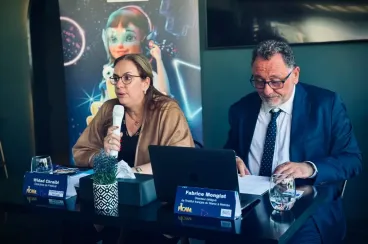
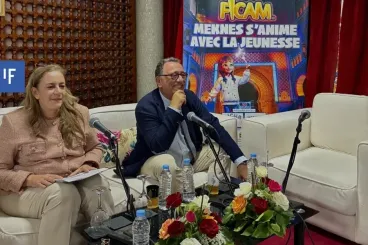
Secretary General of the Aïcha Foundation and director of the Meknes International Animation Film Festival (FICAM), Widad Charaibi spoke to Yabiladi about a key component of the event: visual literacy. According to her, the festival’s 24th edition, currently under way in partnership with the French Institute of Meknes, confirms the strong interest shown by both young audiences and industry professionals.
Organized by the Aïcha Foundation in partnership with the French Institute of Meknes, the Meknes International Animation Film Festival (FICAM 2026) is holding its 24th edition through May 20. Fabrice Mongiat, deputy director of the institute, spoke to Yabiladi about what makes this year’s event unique: a festival firmly rooted in its local setting while also extending its reach to other cities.
The CNDH’s «Youth for Abolition» initiative wrapped up in Rabat, giving young Moroccans from all 12 regions a platform to defend the right to life and push for the abolition of the death penalty. Backed by civil society and international partners, the program seeks to turn Morocco’s de facto moratorium into lasting legislative reform.
 Les articles les plus...









 chargement...