


 chargement...


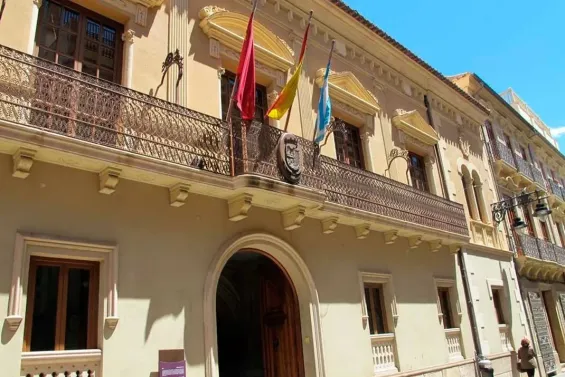
Municipal facilities in Jumilla, a town of 27,000 residents in Spain’s southern Murcia region, will no longer be available for Muslim religious celebrations, including Eid al-Fitr and Eid al-Adha. The decision, approved by representatives of the conservative People’s Party (PP), was originally proposed by the local councillor from the far-right Vox party, who notably abstained from the vote, according to El Pais.
Spanish media have described the move as an act of «institutional Islamophobia», pointing to the PP’s support for what they see as Vox’s discriminatory rhetoric within public institutions. The ban affects approximately 1,500 Muslims in Jumilla, a minority in a region home to many Moroccan immigrants. Nationwide, Spain’s Muslim population is estimated at 2.5 million, of which just over one million hold Spanish citizenship, according to the Andalusian Observatory of the Union of Islamic Communities of the Iberian Peninsula.
While the final version of the approved motion was watered down, stripped of much of its original language, it still marks a fresh expression of xenophobia, especially in the wake of recent politically charged violence in Murcia. In previous years, Muslim communities used municipal sports facilities to gather for prayers during the two major religious holidays. Locally, the ban is seen as a clear violation of freedom of religion and worship, a right protected under Article 16 of the Spanish Constitution.
Critics also highlight a double standard: public and municipal spaces across Spain regularly host Christian religious events tied to cultural traditions, such as Holy Week processions. Yet the motion to ban Muslim festivals justifies itself by pledging to «preserve the values and traditional expressions» of local «cultural identity», ignoring the region’s deep-rooted Arab-Muslim and Jewish heritage.
Restoring Historical Facts and the Principles of the Constitution
Sabah Yacoubi, president of the Association of Moroccan Immigrant Workers (ATIM) in Murcia and national vice president, called the vote «unacceptable» in comments to Yabiladi. She emphasized that the measure contradicts Spain’s constitutional framework and the agreements the Spanish state signed with the Islamic Commission in 1992.
«Banning Muslim religious celebrations in public spaces is not just an administrative decision, it’s outright discrimination», Yacoubi stated. «This idea that Muslim holidays are ‘foreign’ to local identity is both false and dangerous».
Cuando el espacio público deja de ser de todos: Jumilla y la libertad de culto
— Sabah صباح (@Sabah_Yacoubi) August 6, 2025
Lo que ha pasado en Jumilla me parece inaceptable. Prohibir las fiestas religiosas islámicas en espacios públicos no es una simple decisión administrativa,
??? pic.twitter.com/zQaDYZVIyO
In a post on social media platform X (formerly Twitter), Yacoubi asked: «Since when are Holy Week processions in the streets questioned? Who decides what counts as ‘the identity of the people’?» She pointed out that the 1,500 Muslims in Jumilla pay taxes and are part of the community, with the same right to access public spaces for their celebrations.
«Islam is part of Spain. Denying that is denying nearly eight centuries of history», she argued. Yacoubi also reminded that Andalusian heritage lives on in Spain’s culture, language, architecture, and traditions.
«It is not foreign, it is ours. Erasing it is historical revisionism meant to spread hatred». She referenced a 2013 ruling from Spain’s Supreme Court, which made it clear that local councils cannot legislate against the constitutional right to religious freedom. In line with that decision, the court previously overturned local ordinances banning the burqa in Lleida and other municipalities.
In a broader context, Yacoubi sees the Jumilla ban as part of a pattern of escalating far-right rhetoric, especially following the racially charged incidents in Torre Pacheco, also in Murcia. «Islamophobic policies are being tested under the pretext of defending ‘what belongs to us’. It’s a political experiment in exclusion—a laboratory for institutional racism», she warned. She concluded with a call for vigilance: «This is a prelude to a dangerous trend. We must stop it before it spreads to other Spanish municipalities».