


 chargement...


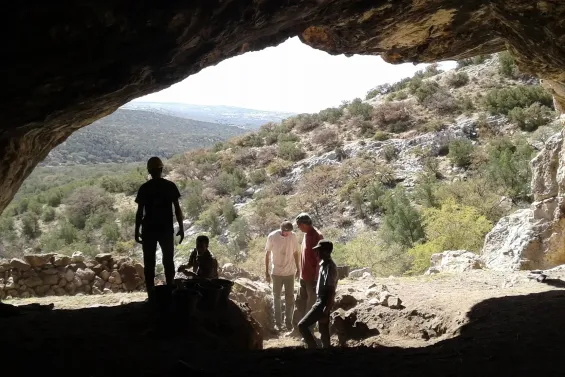
Over the past twenty-five years, our understanding of the deep prehistory of Northwest Africa has undergone a major transformation, thanks to new fieldwork and growing scientific interest in the region. In a recent article published in the Journal of the Royal Anthropological Institute (JRAI), researchers Nick Barton, Abdeljalil Bouzouggar, Stacy Carolin, and Louise Humphrey focus on the reevaluation of Morocco’s Middle and Late Stone Age and its broader impact on international research.
Rich in fossil and archaeological remains, Morocco has long been at the center of groundbreaking discoveries. These findings have become pivotal for understanding the Middle and Late Stone Age, enriching knowledge not only about the nature and chronology of human settlement in the region but also about the evolution of human behavior, lifestyles, and social organization.
A Redefinition of Major Archaeological Periods
New data has led to a significant revision of Middle Stone Age (MSA) chronology, providing more accurate dating for the Iberomaurusian and the transition to the Late Stone Age (LSA). Much of this evidence comes from the Grotte des Pigeons in Taforalt, where over 200 dates have been generated. The site has yielded more than 60 radiocarbon dates for the LSA alone. Beneath these layers lies an «Intermediate» industry, dating from around 27,000 to 24,200 years ago, showing few signs of interruption in occupation.
The most recent MSA deposits, found directly beneath this industry, date to around 29,000–27,000 years ago. In comparison, sites in the Rabat-Temara region also shed light on this transition, although their interpretation remains difficult due to gaps in sedimentation.
Radiometric advances have further confirmed that Morocco’s MSA spans a much longer period than initially thought, beginning at least 300,000 years ago. At the Rhafas cave, a stratified Mousterian–Aterian sequence provided ages of 70–80,000 years for the earliest Aterian, while earlier Mousterian levels dated to 80–90,000 years. At Taforalt, Aterian levels ranged between 73–91,000 years, confirming data from other excavations.
Expanding the Debate
The redating of Jebel Irhoud has provided the oldest known MSA ages in Morocco, suggesting that Homo sapiens may have appeared here as early as in other parts of Africa, making the region central to discussions about human origins. Another key site, the Benzu rock shelter near northern Morocco, yielded MSA artifacts dated by thermoluminescence to 254 ± 17,000 years ago.
These findings have reframed debates on human evolution and population continuity in North Africa. While evidence points to an early presence of Homo sapiens, the occupation patterns appear more complex than a simple continuous settlement. Questions remain about population stability during glacial and interglacial cycles, with some models proposing the use of coastal refuges characterized by humidity and warmer local climates. Whether such continuity was widespread across the region is still uncertain.
The persistence of cultural practices, such as pedunculate hafting techniques and the use of Tritia and Columella shells as ornaments, suggests long-term demographic continuity in Northwest Africa. These enduring traditions strengthen the case for regional cultural resilience over tens of thousands of years.
Moroccan sites such as Taforalt, Bizmoune, and others continue to hold the potential to reveal more about the complex story of humanity in North Africa, where archaeological and genetic evidence are reshaping our understanding of early human evolution and cultural development.