


 chargement...


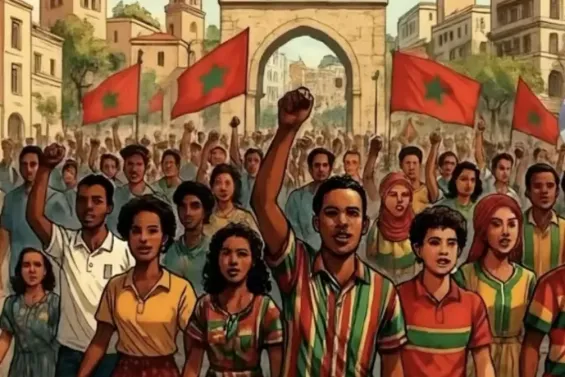
In recent weeks, Morocco has seen a surge of peaceful marches and sit-ins demanding better health and education, from village demonstrations in Azilal to sit-ins outside hospitals in Essaouira, Agadir, and Taounate. Meanwhile, new youth-led calls are emerging through AI-generated posters, online campaigns, and a dedicated website.
In this interview, Marouane Harmach, social media expert and consultant, Associate Director at Consultor, a firm specializing in digital and AI strategies, examines the digital dynamics behind these mobilizations and the new tools shaping them.
How do you read these protests? Do posts and shares help one city or region inspire the next?
The recent protests in Morocco reflect a new dynamic of digital mobilization that is reshaping how social protest takes form. From Aït Bouguemez to Taounate and Agadir, we’re seeing a domino effect amplified by social media.
Posts and shares create a powerful phenomenon of mutual inspiration. The demonstrations in Taounate, for example, gained wide coverage through viral hashtags, prompting other regions to stage their own actions. This recalls the 2018 boycott movement, which used hashtags like #mou9ati3oun and #مقاطعون (#boycotting) to mobilize, proving how effective digital platforms can be in building collective awareness.
The case of Aït Bouguemez demonstrates this in a clear manner: the march to Azilal was widely shared on social media, inspiring other regions to voice their demands. Viral circulation turns local problems into national issues.
This dynamic is strengthened by the government’s weak communication strategy, struggling to «market» achievements and social projects and to reach diverse parts of the population, especially younger generations : Y, Z, and Alpha.
But Morocco is not unique to this. Similar dynamics can be seen abroad, for example, in Nepal, where young people have used new technologies to mobilize around social and political grievances.
How do these digital calls translate into on-the-ground action? And is it the first time we see this?
The shift from digital to street-level action follows an established pattern in Morocco, dating back to the February 20, 2011 movement. Online calls first raise collective awareness, then move to organizing logistics through Facebook pages, Telegram loops, websites, and now AI (a novelty in 2025).
It is certainly not the first time. The February 20 movement already showed this capacity for digital-driven mobilization, followed by the Rif Hirak (2016–2017) and the 2018 boycott. Each wave refined digital techniques, creating a repertoire of action that today’s movements draw on.
What sets the current protests apart is their decentralized yet coordinated nature. Social media allows them to maintain a unified focus on health and education while still adapting to local realities in each region.
At a time when Morocco is investing in sports facilities and preparing to host major events, do you see a connection with the focus on health and education?
The contrast is striking and has become a social fault line. Morocco is pouring massive resources into sports and transport infrastructure, while everyday needs like health and education remain less visible.
According to organizers of the current protests, this prioritization clashes with popular demands. Many citizens see a disconnect between high-profile sports investments and the daily reality of underfunded public services.
This fuels a sense of «territorial and sectoral injustice» that drives protest movements. People are questioning the logic of building prestigious international infrastructure when basic services are still lacking.
We’re seeing youth-led calls for a nationwide «youth march», with some groups using AI-generated posts and even a website with detailed dos and don’ts (what to wear, what to bring, reasons for protesting). Are we witnessing a distinct Gen Z playbook for protest?
Absolutely. The «Moroccan Youth Voice» movement and its website represent a significant step forward in how protests are organized. This bilingual platform provides detailed guidelines for the September 27–28 demonstrations in several major cities.
The use of AI-generated posters marks a generational shift. Unlike earlier movements that relied on handmade visuals, today’s generation harnesses technology to produce viral, professional-grade content in no time. Online discussions even show debates around these aesthetic choices, with some criticizing AI use as a lack of «authentic» creativity.
This generation blends the legacy of past movements (no central leadership) with new tools: a dedicated website, clear behavioral guidelines, and multi-city coordination. It’s a playbook that professionalizes protest while keeping its spontaneous, grassroots spirit.
More broadly, how are social media, AI, and new tools changing protest tactics in Morocco?
The transformation is striking. Generations Y and Z are the main drivers. Social networks have evolved from simple sharing tools into complex ecosystems of digital guerrilla tactics, with AI and websites now added to the mix. AI enables rapid creation of professional visuals and automatic translations to reach different linguistic communities.
Current movements combine anonymity (a legacy of the 2018 boycott), decentralization (from February 20), and digital professionalism (Gen Z’s innovation). This hybrid makes them more resilient to traditional forms of control.
Meanwhile, the state has expanded its surveillance and digital control capacities. The struggle now plays out as much in the algorithmic space as in the physical public square.
These new tools are reshaping the very nature of protest in Morocco: they make it more inclusive and accessible, but also more vulnerable to potential manipulation, whether internal or external.