

 chargement...


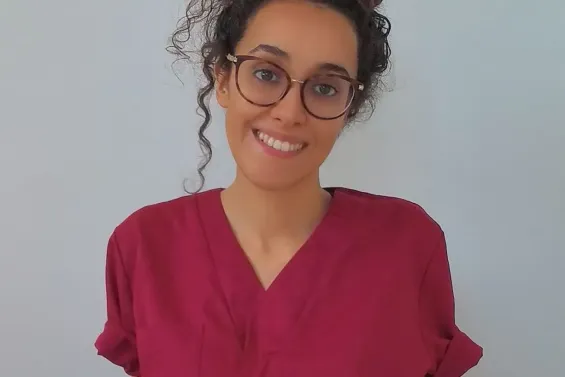
It seems Moroccan women’s dreams don’t stop at the skies, they reach for space. Joudia Touri, a 31-year-old neurosurgeon from Rabat, has taken up that challenge as one of three Moroccan women competing in the Space Exploration & Research Agency (SERA) program.
A joint initiative with Blue Origin, the program offers suborbital flights on the New Shepard rocket to citizens of countries with little or no space presence. Six seats are available worldwide. Joudia is vying for one of the five reserved for citizens of nations with no, or very few, astronauts.
Joudia, who also holds Belgian citizenship, described it as «more than just fulfilling a childhood dream», but rather as a way of bridging her work in medicine with the possibilities of space exploration, she told Yabiladi in a candid interview.

Medicine and space: A shared passion
A graduate of the Catholic University of Louvain in Brussels, she had long dreamed of going into space, well before she chose medicine. «It was first and foremost a lifelong dream», she said, one that started when she was just a little girl. «When it was time to choose my career after graduating high school, going into space felt far beyond reach, so I chose medicine, another passion of mine».
Her dream of exploring the skies may have been delayed, but she found another frontier to conquer: the human brain. «Neurosurgery allowed me to unite two interests: the intellectual fascination with the brain, the control center of our being, the seat of who we are, and the very concrete, hands-on aspect of surgery», she explained.
.jpg)
The path was «intense and demanding», but it taught her discipline, resilience, and «the value of pairing scientific rigor with human compassion». Today, practicing neurosurgery in Rabat, she feels glad she chose that road, because now, with the SERA program, her space dream has come alive again, and she believes she can approach it prepared, as a doctor who understands the brain.
«The scientific literature on space and health is expanding rapidly. We now know that space travel causes profound changes in the human body, from the brain to the cardiovascular and musculoskeletal systems», she said. And for that, «space exploration and health exploration are inseparable», she explained. She points to pressing questions: «How do we prevent health issues to make long-duration spaceflight safer? How do we develop effective countermeasures? And how do we treat medical or even surgical problems while in space?»
As a neurosurgeon, she sees the brain and nervous system as central to this discussion. Medicine and neuroscience, she insists, have «a crucial role to play as humanity ventures further into space», especially with the rise of space tourism.
Women and representation in space exploration
Being one of the few Moroccans competing for a seat fills her with pride. «Succeeding in this endeavor would mean carrying my country’s flag into a field where it has not yet had representation». But that pride, she added, comes with responsibility: «I believe we all have to reach further and pave the way for our fellow citizens, in whatever field we are in».

Especially as a woman, representation matters. «Participation must continue to grow», she said. «My dream of space is therefore not only personal, but also collective: it is about expanding what is possible for Morocco, for women, and for generations to come».
Looking ahead, she admits she cannot hide her excitement: «It is a brief journey into space, but a journey nonetheless». The mission plan suggests the selected crew will carry out scientific experiments while in orbit, though details remain unclear. Still, Joudia is «open to gradually redirecting some of [her] efforts toward research linking neuroscience or neurosurgery with space».
Until then, she hopes to secure her spot on this cosmic trip. If not, she says, «I aspire to inspire others to take that step and to bring visibility to Morocco’s potential in space exploration».