

 chargement...


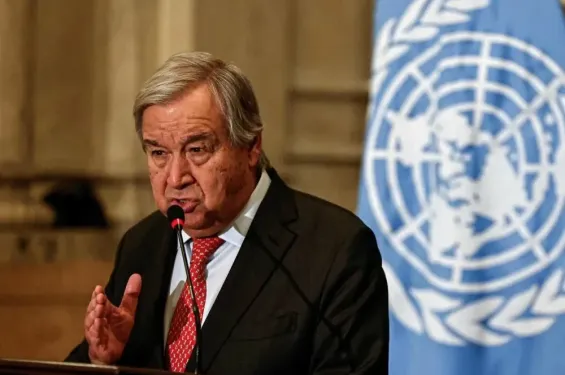
UN Secretary-General Antonio Guterres devoted part of his latest report on Western Sahara to the human rights situation both in the areas under Moroccan control and in the Tindouf camps. He recalled that «the United Nations High Commissioner for Human Rights (OHCHR) has not been authorized» by Moroccan authorities «to access the territory since 2015, despite repeated requests», even though the Security Council, in its latest resolution 2756 (2024), «strongly recommended enhanced cooperation with the OHCHR, particularly by facilitating visits to the region».
He noted that «the lack of independent, impartial, comprehensive, and sustained monitoring of human rights continues to hinder a full assessment of the situation on the ground». As a reminder, the Security Council last year rejected an Algerian proposal to expand MINURSO’s mandate to include human rights monitoring.
Guterres added that «during the period under review (October 2024 to September 30, 2025), the OHCHR continued to receive reports of shrinking civic space and restrictions on Sahrawis’ rights to freedom of expression, association, and peaceful assembly, amid increasing surveillance, harassment, and intimidation». Cautiously, he remarked that «Moroccan authorities are said to have suppressed demonstrations and gatherings in favor of self-determination».
«Food insecurity» among the Polisario
The Secretary-General recalled that in March 2025, two UN special rapporteurs sent a communication to Morocco expressing concerns about alleged violations affecting 79 Sahrawi activists, accusations that Morocco denied, according to the report.
Guterres also condemned «the conditions of incarceration of Sahrawi detainees», citing «isolation, lack of contact with families, and restricted access to medical care». He noted that «the OHCHR received reports of similar violations against other Sahrawi detainees, including discriminatory treatment by prison authorities. At least one death in detention has been reported».
He further wrote that «following the European Court of Justice rulings of October 2024, the OHCHR received information indicating that the Sahrawi population does not benefit from Morocco’s exploitation of the territory’s natural resources, asserting that such exploitation is incompatible with the principle of self-determination applicable to the people of Western Sahara».
In contrast, regarding the Tindouf camps, Guterres pointed to «persistent precarious living conditions, particularly food insecurity, and the need to ensure the protection of the human rights of Sahrawi refugees». He noted, in paragraph 74, that «in a note verbale addressed to the OHCHR on June 26, 2025, Morocco provided information on its cooperation with human rights mechanisms, measures taken to ensure the enjoyment of civil and political rights, and efforts toward economic, social, and cultural development».
He concluded this section by stating that «Morocco also reported alleged human rights violations in the Tindouf camps».