

 chargement...


Morocco counts 1,144,801 students enrolled in public universities, which represent 87% of all higher-education registrations. This marks a projected 3.8% increase compared to the previous academic year, bringing the total to more than 1.31 million students. According to ministry forecasts, 102,462 students are enrolled in private institutions (8%), a 12.5% rise from 2024–2025. Meanwhile, 62,637 students (5%) attend higher-education institutions not affiliated with universities, representing a 10.3% year-on-year increase. Overall, 71% of students are in open-access institutes, while 29% attend limited-access ones.
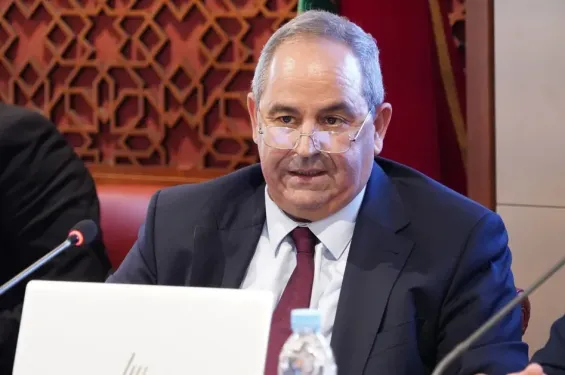
During a press conference titled «The Foundations of the University of Tomorrow», Minister of Higher Education, Scientific Research, and Innovation, Azzedine El Midaoui, stated on Wednesday in Rabat that institutions have welcomed more than 338,500 new students for the 2025–2026 academic year. In public institutions, 928,195 students (81%) are enrolled in open-access programs (+2.5%), while 216,606 (19%) attend limited-access programs (+10.3%). Among open-access students, 50% study law, economics, and social sciences (+2%), 26% arts and humanities (+3%), 12% sciences (+5%), and 12% are in multidisciplinary faculties (+0.4%).
In terms of staffing, Morocco counts 18,726 teaching-research faculty members and 8,058 administrative and technical staff, in addition to 330 professors and 303 administrators who remained active after retirement age extensions in 2025.
Free Public Education: A Non-Negotiable Principle
To improve access to higher education, the ministry is developing a new model of university housing through public-private partnerships. This includes adding 3,962 beds to existing public residences and building five new university cities offering an additional 7,500 beds.
El Midaoui stressed that these developments require an updated regulatory framework aligned with international academic standards, particularly through curriculum modernization and diversified program pathways. Addressing questions about the quality of education, he reaffirmed that «no one will touch the gratuity» of public higher education.
This clarification follows controversy over the introduction of paid courses in public universities. The minister explained that traditional students are not subject to any fees. The paid programs mainly target professionals, executives, civil servants, and employees, whose schedules differ from those of regular students. These courses lead to the same diplomas as standard programs but require fees to support service improvements and adapted scheduling. «This does not mean public higher education will become paid, and we are closely monitoring this», he insisted.
Updating the Regulatory Framework to Modernize Academic Practice
El Midaoui also highlighted reforms aligned with Framework Law 51.17, including the preparation of five draft laws, sixteen decrees, and seventeen orders. Among them is Bill 59.24 on the organization of higher education and scientific research, currently under review.
He also noted the new structure for open-access institutions and the reorganization of establishments whose founding decrees have been published in the Official Bulletin. These measures, among others, aim to enhance both the quality and accessibility of higher education.
The minister emphasized the completion of pedagogical reform in several disciplines, as well as updates to bachelor’s and master’s program standards. He recalled that part of Bill 59.24 focuses on scientific research and the development of the National Strategy for Scientific Research 2026–2035.
The reforms also seek to strengthen scientific infrastructure through new regional branches of the Scientific and Technical Research Support Units (UATRS), making research equipment more accessible to scientists nationwide.