


 chargement...


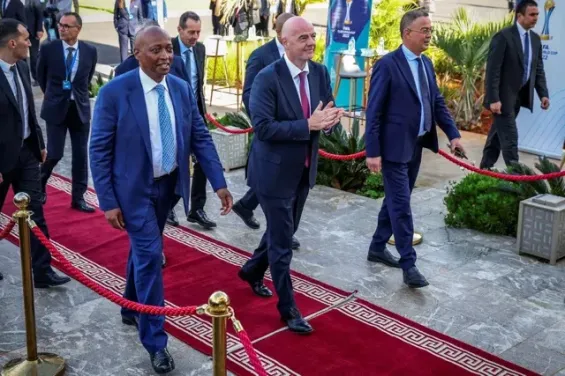
As the Africa Cup of Nations (CAN) approaches in Morocco, the age-old conflict between European clubs and African national teams has reignited. In a recent meeting with the European Club Association (ECA), FIFA decided to restrict player availability to just seven days, a move that has once again stirred tensions across the continent and disrupted team preparations. This recurring issue is a source of frustration for sports journalists.
Hanif Ben Berkane, a journalist at Footmercato, views this saga as almost routine: «It's the same narrative and controversies every time. The years pass, yet CAF still struggles to assert its authority. The preparation conditions for AFCON never match those for a Euro or World Cup.»
While he acknowledges the demands of the European calendar mid-season, Ben Berkane believes the problem is more profound: «Even if AFCON were held in the summer, issues would persist. If it's not the clubs holding back, it's FIFA conceding to them. The only silver lining is that some coaches are beginning to speak out against the situation.»
CAF's Weakness Against FIFA
Said Abadi, a journalist at Canal+, perceives this decision as a sign of disregard for AFCON: «This controversy resurfaces before every edition. It's regrettable because it underscores the lack of respect for Africa's most prestigious competition.»
He points to a CAF that is too weak in the face of FIFA: «If the Confederation had a stronger voice, this debate wouldn't exist. The AFCON schedule is regularly disrupted; this year, it was postponed to winter due to the new Club World Cup, even though a summer tournament would have been ideal for Morocco and the clubs.»
According to him, the consequences are tangible: «Teams can't prepare properly—fewer training sessions, no friendly matches... Some had already booked their hotels in Morocco. Another 'disasterclass' Africa could have done without.»
Reda Allali, a Moroccan journalist known for his work on the show La Bombonera on Radio 2M, believes the tension extends beyond the African context. «Today, there is a real conflict between national football and European clubs, which see players as their employees and are disrupted by international breaks.»
A System at Breaking Point?
Allali observes that even star players contribute to this defiance: «We've seen Kylian Mbappé choosing his matches because playing in Azerbaijan bothers him, Kevin De Bruyne dismissing the Nations League as pointless while facing the Netherlands... Such stances would have been unimaginable a few years ago.»
Behind these statements, Allali identifies a broader discontent: «Players are increasingly vocal about the number of matches. Football is consuming itself, self-destructing by multiplying competitions without pause.»
Beyond AFCON, the three journalists concur: the proliferation of competitions, economic pressures, and the overwhelming power of European clubs are taking a toll on national team football.
Afcon continues to suffer from CAF's political frailty and a global calendar skewed in favor of Europe. As long as this structure remains unchanged, the conflict will persist. For now, African teams, including Morocco, must contend with rushed preparations.