


 chargement...


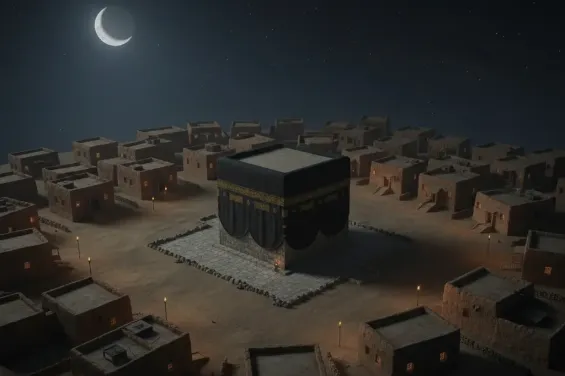
During the era of the Rightly Guided Caliphs, the month of Ramadan was a season of competing in good deeds and intensifying worship. It also marked the beginning of major conquests that would alter the course of history.
Ramadan in the time of the Rightly Guided Caliphs was characterized by simplicity and deep devotion, far removed from the extravagance that emerged in later periods. The focus was on the essence of worship and its role in refining the soul.
According to the book «Ramadan Through History» by Abdullah Hamad Al-Huqail, the Rightly Guided Caliphs played a central role in encouraging righteous deeds during Ramadan. In their time, «homes were centers of worship, remembrance, the pursuit of knowledge, and reflection upon the creation of the heavens and the earth». During the fasting month, they would «maintain family ties, honor guests, and give charity despite their limited means at Iftar and Suhoor».
Simplicity, Devotion, and Asceticism
Their Iftar, the same source notes, consisted «either of dates or barley bread. They never filled their stomachs, even when food was available, preferring to follow the example of the Prophet Muhammad, peace be upon him, by minimizing food and drink during Ramadan». Prayer was their constant practice, and they would supplicate privately, asking God alone, glorified and exalted be He, to support Islam and grant it honor.
The nightly prayers of Ramadan continued in the Prophet’s Mosque, both individually and in congregation, as they had during the Prophet’s lifetime. This practice persisted during the caliphate of Abu Bakr Al-Siddiq and the early period of Umar ibn Al-Khattab.
Ramadan Through History adds that «the odd nights of Ramadan were observed with greater devotion, remembrance, prayer, supplication, and recitation of the Holy Quran in both the Prophet’s Mosque and the Sacred Mosque».
A major organizational development came under Caliph Umar ibn Al-Khattab, who is credited with gathering worshippers behind a single imam for the Taraweeh prayer in Medina.
Al-Huqail writes that during «the time of Umar Al-Farooq, may God be pleased with him, mosques were illuminated during the nights of Ramadan to assist worshippers. He gathered the people for Taraweeh behind one imam, a practice that continues across the Islamic world to this day».
Ramadan: The Month of Great Victories
During the era of the Rightly Guided Caliphs, Ramadan was also a time of decisive military victories.
In Ramadan of the 13th year of Hijra, the Battle of Al-Buwayb took place during the caliphate of Umar ibn Al-Khattab. Led by Al-Muthanna ibn Haritha, Muslim forces avenged their earlier defeat at the Battle of the Bridge and inflicted a crushing blow on the Persians.
On the 13th of Ramadan in the 15th year of Hijra, Umar ibn Al-Khattab traveled to the Levant to receive the keys to Jerusalem following fierce battles against the Romans.
He then oversaw the cleaning, organization, and reconstruction of the area surrounding the Rock and Al-Aqsa Mosque. A prayer space was established within Al-Aqsa Mosque, away from the Rock, later serving as the foundation for further architectural development. During the Roman period, the site had been neglected and left in disrepair.
The first congregational prayer at Al-Aqsa Mosque under Umar’s leadership was marked by his leading the Muslims in two units of prayer, symbolizing a new chapter in the city’s history.