

 chargement...


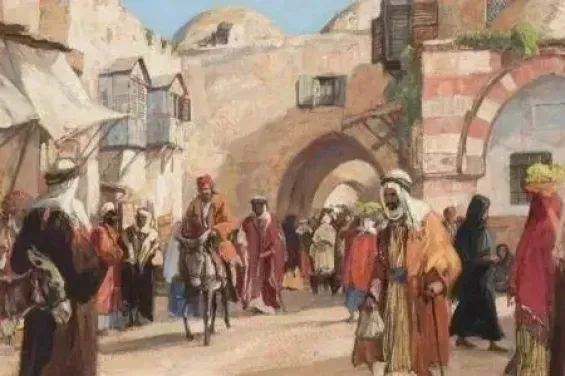
The Umayyad dynasty came to power following a period of major civil strife, ushering the Islamic world into a phase of political stability and vast territorial expansion in all directions. Amid these transformations, the Umayyad caliphs preserved the special status of the month of Ramadan, which had been made obligatory in the second year of the Hijra, reinforcing it as a season of worship and the revival of religious rituals.
During the era of the Rightly Guided Caliphs, Ramadan practices remained largely consistent with those observed during the lifetime of the Prophet, peace be upon him. The focus was on fulfilling obligatory and voluntary acts of worship, increasing charitable giving, and enlivening the nights with prayer and remembrance. With the rise of the Umayyads, the essence of these practices did not change. However, the expansion of cities and the development of state institutions introduced a clearer organizational dimension to the observance of the holy month.
One of the most notable customs associated with Ramadan during the Umayyad period was the renewal of the Kaaba’s covering (kiswah). Abu al-Walid al-Azraqi al-Makki records in Akhbar Makkah that «Muawiya ibn Abi Sufyan covered it with two coverings: the Qibati cloth used by Umar and a silk covering. It was dressed in silk on the day of Ashura and in Qibati at the end of the month of Ramadan».
The Qibati was a type of Egyptian fabric woven since the time of Caliph Umar ibn al-Khattab, reflecting the Umayyad state’s effort to enhance the solemnity and grandeur of rituals connected to the sacred month.
Historical accounts further indicate that during the Umayyad era, the kiswah was sent from Damascus, the capital of the caliphate, and made from the finest fabrics. This practice symbolically reinforced the political and spiritual centrality of the caliphate and its connection to the Two Holy Mosques.
The Umayyads also paid particular attention to preparing and perfuming mosques for Ramadan, especially the Prophet’s Mosque in Medina. Muhammad ibn Saad al-Baghdadi notes in Al-Tabaqat al-Kubra that «the governors before Umar ibn Abdul Aziz used to provide incense for the Mosque of the Messenger of Allah, peace be upon him, during gatherings and to scent it in Ramadan, funded by alms and charity». Umar ibn Abdul Aziz later discontinued this practice to safeguard public funds.
Mosques were also illuminated with lanterns from the first nights of Ramadan, allowing Muslims to perform Taraweeh prayers and observe night worship in a fitting atmosphere, particularly as urban centers expanded and populations grew.
Organizing prayer in the Grand Mosque and feeding the poor
The Umayyad era witnessed an organizational shift in the performance of night prayers at the Grand Mosque in Mecca, in response to the increasing number of worshippers during Ramadan. Abu Ubayd al-Bakri notes in Al-Masalik wa al-Mamalik that the first to arrange prayer rows around the Kaaba during Ramadan was the Umayyad governor of Mecca, Khalid ibn Abdullah al-Qasri.
Al-Fakihi, in Akhbar Makkah, explains that previously, people performed night prayers in the upper part of the Grand Mosque, with a spear placed behind the Maqam Ibrahim as a marker for the imam. Worshippers could either join the imam or continue performing tawaf and prayer individually. When Khalid ibn Abdullah al-Qasri was appointed governor under Caliph Abdul Malik ibn Marwan, he reorganized the congregation by instructing reciters to lead prayers behind the Maqam and arranging the rows around the Kaaba to manage the growing crowds more effectively.
The Umayyads also upheld the tradition of feeding those who were fasting. Al-Azraqi reports that Muawiya ibn Abi Sufyan purchased a house in Mecca where food was prepared for pilgrims and distributed to the poor and those fasting during Ramadan.
Abu al-Hasan al-Baladhuri recounts in Ansab al-Ashraf that the Umayyad governor of Iraq, Al-Hajjaj ibn Yusuf al-Thaqafi, would provide one thousand tables of food daily during Ramadan and other times. Each table included forty loaves of bread, a bowl of stew, grilled meat, rice, fish, vinegar, and greens. He would personally inspect the meals, asking whether anything was lacking.
Some accounts also mention that Caliph Muawiya ordered large banquets throughout Ramadan, particularly in Egypt, where lavish feasts were organized and open to the public.
Tradition further attributes the origins of the dessert knafeh to the Umayyad period. According to some reports, Muawiya suffered from hunger during Ramadan, and his physician prescribed a semolina-based dish that later became known as knafeh. Over time, it evolved into a Ramadan staple, with variations in preparation and fillings.
Another dessert reportedly introduced during the Umayyad era was «Qatayef al-Sultan», served at official banquets attended by governors and officials, and prepared exclusively during Ramadan.