

 chargement...


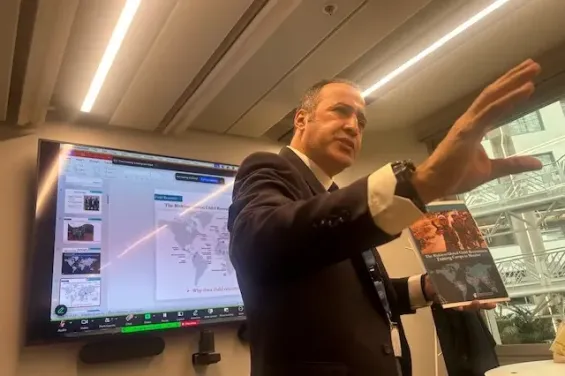
On the sidelines of the 61st session of the United Nations Human Rights Council, Geneva hosted an international conference on Tuesday, March 10, focusing on the fight against the recruitment of child soldiers. Organized by the Geneva Nations Institute in partnership with the newspaper Geneva Times, the event highlighted the enlistment of young Sahrawis by militias linked to the Polisario, allegedly with support from Cuba.
At the center of the discussions was the Rabat Call, adopted on November 20, 2025, by more than 40 African states. The declaration seeks to establish a continental framework for the reintegration of children forced to join armed groups, while ensuring their legal and social protection. It is built around three key principles: prevention and protection, comprehensive reintegration, psychological, social, and educational, and the non-criminalization of child victims. Morocco brought the initiative to the international stage by submitting the text as an official document to the United Nations on December 1.
Dr. Mustafa Blerim, vice-president of the Geneva Nations Institute, stressed the need to turn diplomatic commitments into concrete action, including schooling, psychological support, and social integration. «These children are, above all, victims. Their reintegration must go beyond security measures; it must give them a future», he said.
Dr. Abdelkader Filali, president of the International Center for Research on the Prevention of Child Soldiers in Dakhla, denounced what he described as coercive practices. «This is not simply a religious or local issue, but a systematic exploitation of children for military purposes», he noted, recalling that groups such as Joseph Kony’s in Uganda had already used ideological and religious manipulation to recruit young victims.

Testimony of a Sahrawi child enlisted by militia
The moving testimony of Hamada Bouihi, a Sahrawi who spent 40 years in the Tindouf camps, shed light on the practices attributed to the Polisario. He described the indoctrination of children and their military training, condemning what he called a «theft of childhood» carried out with the support of foreign allies such as Cuba.
Bouihi recounted how, at the age of nine, he was sent to Cuba to study revolutionary ideology and undergo military training, including learning how to dismantle a Kalashnikov and handle grenades, before returning to Tindouf.
He called on the international community to intervene, arguing that urgent action is needed to protect these children and ensure respect for their fundamental rights.
Discussions also addressed the responsibility of states and the role of local communities in the reintegration process, in order to prevent stigmatization and rejection. Prof. Alfred de Zayas, a former UN independent expert, stressed that national legislation must be aligned with international standards to punish forced recruitment and better protect children.
The Geneva conference took place at a time when the recruitment of children by armed groups remains a major challenge in parts of Latin America, Asia, and Africa. By drawing attention to the issue of child recruitment linked to the Polisario and its supporters, the event highlighted a problem that has long remained underreported on the international stage. The Rabat Call, now placed on the United Nations agenda, could become a tool to help break the cycle of violence and give these children a chance to reclaim their childhood.