

 chargement...


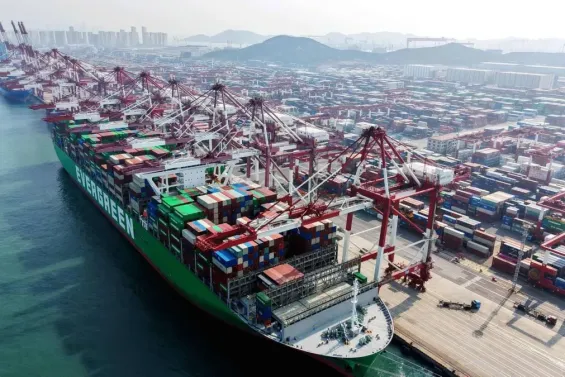
Amid escalating tensions linked to the war in Iran, Morocco’s economy is facing a new test, caught between external pressures, rising energy prices and supply chain disruptions, and potential opportunities to reposition itself within global value chains.
Economic experts say Morocco enters this crisis with a «medium to good» financial position, but with clear vulnerabilities in terms of energy sovereignty, given its near-total reliance on fuel imports.
In this context, economist Khalid Achibane notes that Morocco has shown strong resilience in recent years, whether during the COVID-19 pandemic, the inflationary shock triggered by the Russia-Ukraine war, or recurring droughts. Despite direct impacts on purchasing power, the economy has absorbed these shocks with limited damage. «This resilience reflects the strength of industrial sectors and their ability to maintain activity,» he said, suggesting Morocco is capable of weathering the current crisis.
Purchasing power under pressure
However, Achibane stresses that the country’s structural weakness lies in its lack of energy sovereignty. «Morocco neither produces oil nor gas, making it highly exposed to external shocks», he explained. These shocks first affect households’ purchasing power, then business productivity through rising costs, and ultimately the country’s economic relations.
Economic analyst Amine Sami offers a more nuanced view, highlighting three key strengths: improved financial and external buffers, strong foreign reserves, and a degree of diversification in energy supply. At the same time, he points to three vulnerabilities: heavy reliance on fuel imports, the absence of local refining capacity, and high sensitivity to oil, transport, and insurance costs.
According to Bank Al-Maghrib, Morocco’s official reserve assets reached 455.8 billion dirhams, while the International Monetary Fund considers the country has «sufficient buffers» to absorb shocks, supported by a flexible credit line.
Sami describes the overall situation as «financially medium to good, but energy-wise medium to vulnerable,» noting that any fuel-importing economy will quickly feel the impact. Morocco currently holds diesel reserves for 51 days and gasoline for 55 days, with coal and gas secured until the end of June, enough to absorb short-term shocks, «but not to withstand a prolonged crisis that would structurally reprice energy, transport, and insurance.»
Experts warn that disruptions could intensify, particularly if tensions persist in the Strait of Hormuz, a key global energy chokepoint. While Morocco is working to diversify its suppliers, Achibane notes that the real challenge lies in rising prices, as the country remains tied to global market rates.
Sami adds that the issue goes beyond sourcing, extending to shipping costs, insurance premiums, and delivery times, as global markets increasingly price in geopolitical risk. Fuel prices have already risen and could continue to do so, with broader impacts on transport, agriculture, industry, and public finances.
Fertilizers and strategic opportunities
The impact also extends to fertilizers. Achibane notes that Morocco imports key chemical inputs from the Middle East, exposing it to price hikes and supply disruptions. However, higher global prices could boost export revenues, particularly for OCP, which benefits from strong international positioning and diversified sourcing options.
Sami adds that around a third of global fertilizer trade passes through the Strait of Hormuz, meaning any disruption would raise input costs, particularly for ammonia and sulfur. Despite its industrial strength, OCP remains partly dependent on these imports.
Still, experts see opportunities. Rising global demand could position Morocco as a preferred supplier outside conflict zones, strengthening its role in international markets.
At the same time, Europe’s shift toward closer trade partners could benefit Morocco, whose exchanges with the EU account for more than 67% of its trade. This dynamic could reinforce the Kingdom’s role as an industrial and logistical hub, particularly in sectors such as automotive, textiles, agri-food, and tourism, as well as in renewable energy and green hydrogen.
To navigate the crisis, Sami advocates a dual approach: protecting purchasing power and securing supply chains, while accelerating energy transition, industrial development, and investment. This includes targeted support for affected sectors, expanding strategic reserves, and speeding up renewable energy projects.
Ultimately, experts agree that Morocco will face short-term pressures from rising energy costs and inflation. But in the medium term, the crisis could become a strategic opportunity, allowing the country to strengthen its position in regional and global value chains, provided it acts swiftly and effectively.