

 chargement...


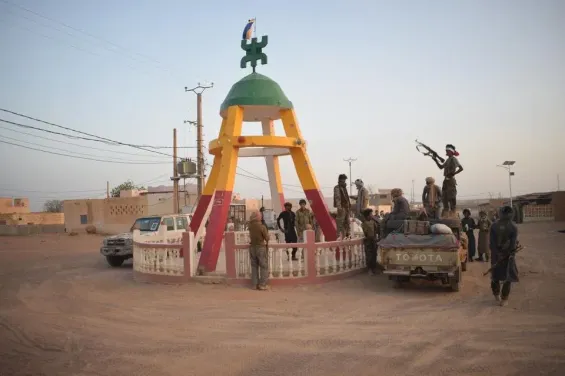
Morocco has firmly condemned the «terrorist and separatist attacks» of April 25 targeting Mali, stressing that its position is not driven by circumstantial factors, such as Bamako’s recent withdrawal of recognition of the self-proclaimed «Sahrawi Republic», but reflects a consistent and longstanding diplomatic doctrine.
The kingdom has long supported Mali’s sovereignty, even during its earlier engagement with Azawad movements. This was illustrated in January 2014, when King Mohammed VI received Bilal Ag Cherif, secretary-general of the National Movement for the Liberation of Azawad (MNLA), along with spokesperson Moussa Ag Attaher, in Rabat.
The meeting took place as negotiations between the Malian government of former President Ibrahim Boubacar Keïta and opposition groups were progressing in Algiers toward a peace agreement, under French mediation. Although Morocco was not part of the process, it never endorsed the creation of an «Azawad state». At the time, Algeria itself strongly opposed Tuareg independence claims, a position reflected in the Algiers Accords signed in March 2015.
A growing convergence between separatism and terrorism
A decade later, a notable shift appears to be underway. Algeria has adopted a more open stance toward Tuareg representatives. On February 26, 2023, President Abdelmadjid Tebboune received members of Azawad groups, sending a signal to Mali’s military authorities, who came to power following the August 2020 coup.
On December 30, 2024, several groups were brought together under the Azawad Liberation Front (FLA). This dynamic was followed by an alliance between the FLA and the jihadist Group for the Support of Islam and Muslims (JNIM), affiliated with Al-Qaeda. This convergence, often described as an «unnatural alliance», has raised serious concerns about regional stability.
Key figures and armed groups continue to play a central role in this landscape. Iyad Ag Ghaly, leader of JNIM, is seen as continuing the trajectory of earlier jihadist groups such as the Salafist Group for Preaching and Combat (GSPC) and Al-Qaeda in the Islamic Maghreb (AQIM), once led by Abdelmalek Droukdel, who was killed in June 2020 during a French military operation.
This convergence between separatist movements and terrorist groups poses a major threat to the Sahel and West Africa, particularly for countries with fragile institutions such as Mauritania, Niger, and Chad, as well as more stable states like Senegal, which faces separatist tensions in Casamance.
Like Morocco, the United States has also condemned the attacks against Mali. However, Algerian authorities have remained silent, despite their stated commitment to counterterrorism, an apparent contradiction that has drawn criticism.