


 chargement...


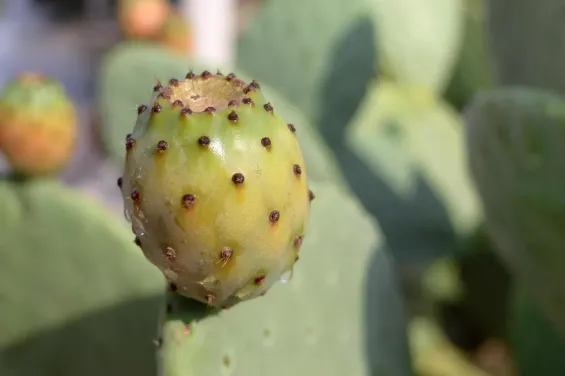
Prickly pear markets in Morocco are currently experiencing a noticeable surge in prices, marking a significant shift for a fruit long accessible to all social classes and commonly known as the «fruit of the poor». This sharp increase, which has surprised consumers, reflects a deeper crisis affecting the sector for several years, mainly driven by the spread of the cochineal insect and a decline in production.
In this context, Zouhair Sabir, president of the Aknari Agricultural Cooperative and a specialist in cactus and olive cultivation, told Yabiladi that «the rise in cactus prices is not just a seasonal phenomenon; it began with the spread of the cochineal insect, which led to a drop in production». Naturally, when supply decreases, prices increase, he noted.
He explained that the pest has devastated large areas of cactus plantations in key producing regions, including Doukkala, Rehamna, and Ait Baamrane, significantly reducing supply. At one point, Morocco was even forced to import prickly pears from Italy, where «the price reached around 13 euros per kilogram», before imports stopped as local production gradually resumed.
The cochineal insect at the heart of the crisis
Despite this partial recovery, production remains below previous levels, explaining the continued high prices, currently ranging between 40 and 45 dirhams per kilogram. According to the sector professional, the original cactus variety was so severely affected that it was nearly driven to extinction, prompting many farmers to abandon its cultivation.
At the same time, new production areas have emerged thanks to efforts by cooperatives and farmers «who have worked to revive this crop while maintaining the original variety», which professionals consider superior in taste and appearance compared to resistant varieties.
«Cactus cultivation has become more costly and complex, requiring plowing, treatments, and the adoption of drip irrigation systems, in addition to constant field monitoring to detect the cochineal insect, which requires a permanent workforce to avoid major losses», he argued.
Sabir also called for stronger state support, noting that current assistance is limited to resistant varieties, which are distributed free of charge and irrigated about ten times per season for up to two years. In contrast, the original variety remains outside these programs, making its preservation more difficult.
Prices expected to ease
Among the varieties currently cultivated are «Moussa Cactus» and «Issa Cactus», as well as a light-colored smooth variety from Doukkala and another from the Majdaba area. Modern drip irrigation has become essential, despite higher costs.
Sabir expects prices to gradually decline in the coming years as hundreds of hectares have recently been planted. He added that «prices will become more affordable for consumers starting in July», with the peak summer season bringing higher production, unlike winter and spring when output remains limited and labor-intensive.
For example, a 50-hectare farm may produce only 50 crates outside the summer season, reflecting low yields, he added. «There is also an urgent need for value-added processing units to avoid losses, especially if high production coincides with weak demand, which could lead to price drops and reduced profitability».
He concluded by stressing the importance of opening export markets in Europe and Africa to help stabilize the sector and ensure its sustainability, emphasizing that preserving the cactus value chain requires coordinated efforts from all stakeholders amid ongoing challenges linked to the cochineal insect.