


 chargement...


Ceuta and Melilla have returned to the forefront of political debate in Spain, as discussions over their status intensify, particularly following remarks from U.S. officials that have raised growing concern. In this context, the People’s Party (PP), the country’s main opposition force, has decided to take action on the issue.
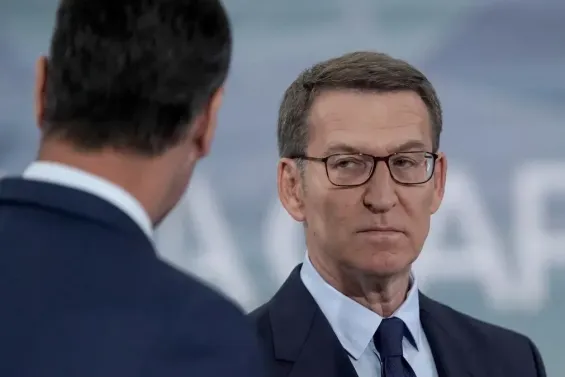
Party leader Alberto Núñez Feijóo announced that he will visit Ceuta on Saturday, May 9, coinciding with Europe Day, to deliver a clear message that the two cities are «an integral part of the Spanish nation». The move is widely seen as a direct political response to the renewed debate surrounding their status.
The controversy follows a report by the U.S. House of Representatives Appropriations Committee, led by Republican Congressman Mario Díaz-Balart, which questioned Spain’s «sovereignty» over the two cities. The report stated that Ceuta and Melilla are «administered by Spain but located in Morocco», and urged U.S. Secretary of State Marco Rubio to take steps toward addressing their status.
People’s Party ramps up pressure
The PP is seeking to leverage these developments to increase pressure on Prime Minister Pedro Sánchez’s government, insisting that «the protection of Ceuta and Melilla is neither optional nor negotiable». The party has called for strengthening the state’s presence in the two cities and enhancing their representation within the European Union. It also advocates granting them a status similar to geographically remote regions, such as the Canary Islands, to improve funding and access to EU resources.
The party is also emphasizing the political and symbolic importance of Ceuta and Melilla, describing them as Spain’s and Europe’s southern borders and as examples of coexistence between cultures and religions, an argument aimed at both domestic and international audiences.
By contrast, the far-right Vox party, usually vocal on issues related to the two cities and known for its proximity to former U.S. President Donald Trump, has remained notably silent.
Madrid opts for de-escalation
For its part, the Spanish government continues to pursue a strategy of de-escalation, seeking to avoid direct confrontation with Washington. Authorities at Moncloa are working to contain the fallout from these developments without issuing statements that could further inflame tensions.
Foreign Minister José Manuel Albares, speaking in Rome, reiterated that «the Spanishness of Ceuta and Melilla, like that of Valladolid or Santiago de Compostela, is beyond doubt», reaffirming Madrid’s position without escalating the dispute.
This cautious approach reflects a broader strategy in managing relations with the United States, particularly following tensions sparked by the leak of a U.S. Department of Defense document suggesting the possible suspension of Spain’s NATO membership, an issue that was later downplayed by both sides.
These developments come amid ongoing strains between Madrid and Washington over defense matters, notably after Spain refused to allow U.S. forces to use military bases in Rota and Morón for operations linked to the war in Iran, a decision that drew criticism from Donald Trump.