Debate in Spain over Ceuta and Melilla is intensifying after statements from U.S. officials raised questions about their status, prompting the People’s Party to take action on the ground while the government opts for a cautious approach to avoid escalation.
Moroccan political parties are racing to attract artists and celebrities ahead of the upcoming legislative elections, seeking to boost their appeal and strengthen their electoral presence.
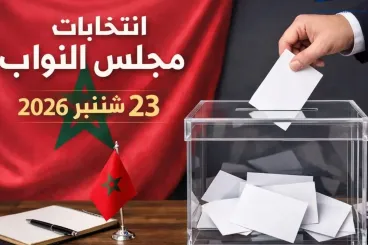
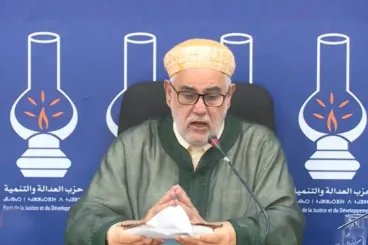
With five months to go before the next legislative elections, Abdelilah Benkirane urges members of the PJD to prepare for coexisting with the «control exercised by the State» and the «privileges». As he did between 2012 and 2017, he invited them to «overcome the barriers erected by the State» in order to solve certain problems.
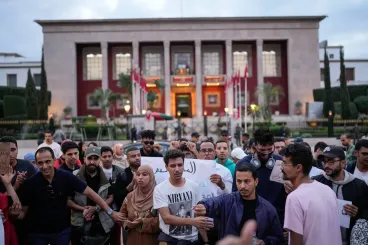
Despite making up a significant portion of Morocco's population, young Moroccans express deep skepticism toward political institutions, with recent Afrobarometer data revealing a stark generational divide in trust levels and perceptions of corruption. While committed to democratic principles, this demographic is more critical of their implementation and engages in alternative forms of political participation, highlighting a disconnect between youth and traditional political structures.
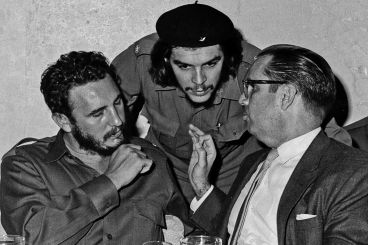
While Mandela came to Morocco to get the help he needed to defeat the Apartheid regime, Che Guevara was invited by Prime Minister Abdallah Ibrahim. During the same period, Fidel Castro had breakfast with King Hassan II in Rabat.
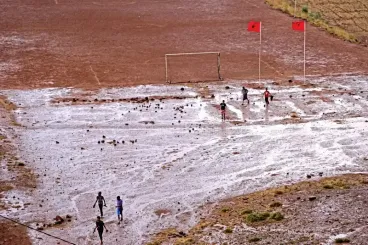
«Achta ta ta» is widely remembered in Morocco as a joyful children’s rain chant marking the start of winter. But that playful refrain is only the beginning of a longer, politically charged song that many have since forgotten.
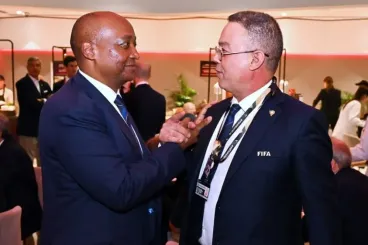
Once upon an AFCON. Africa wanted to present the world with its best image. But in the 98th minute of the final, it fell back into its comfort zone: populism, conspiracy theories, and rules trampled underfoot, all unfolding in a fiasco broadcast to the world. Morocco took one step forward. CAF took two steps back.
 Les articles les plus...









 chargement...