


 chargement...


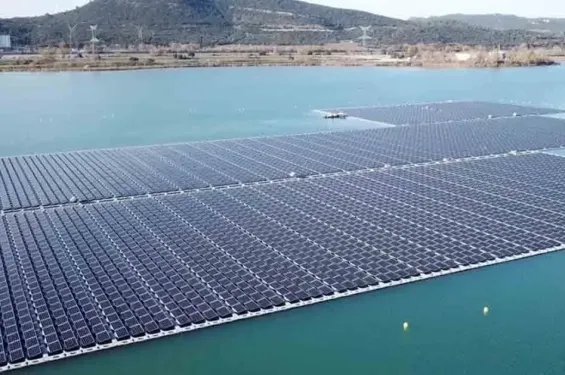
In the face of escalating water scarcity and the increasing demand for energy, floating photovoltaic solar systems present a strategic opportunity for Morocco. These systems not only generate clean electricity but also help conserve precious water resources.
This potential is highlighted in a recent scientific study conducted by a group of Moroccan researchers. The research examined 58 dams across Morocco, which cover a combined area of roughly 433 square kilometers and lose approximately 909 million cubic meters of water each year due to evaporation.

The findings suggest that covering just 1% of these dam surfaces with solar panels could significantly help meet Morocco's energy requirements, offering a swift return on investment. Expanding coverage to 40% could theoretically satisfy the entire national electricity demand, which amounted to 42.38 terawatt-hours in 2023.
Balancing Energy Production and Water Conservation
The benefits of these systems extend beyond energy generation; they also play a crucial role in reducing water evaporation, a vital consideration given Morocco's recent droughts. By shielding water surfaces from direct sunlight, floating panels can substantially decrease water loss. Global studies suggest that this technology can cut evaporation by 25% to 60%, depending on the conditions.
The study highlights that evaporation peaks during the summer months, particularly in July and August, emphasizing the urgency for innovative solutions like floating solar energy. The Al Wahda Dam is the most severely affected, losing around 183.88 million cubic meters of water annually.

A major advantage of this technology is that it doesn't require additional land, a significant benefit in a country facing mounting real estate pressures. Additionally, placing panels over water provides a natural cooling effect, enhancing their efficiency by up to 2% compared to land-based systems.
Morocco is already exploring this technology through pilot projects such as the Sidi Slimane plant, which has a capacity of 360 kilowatts, and the Oued Rmel Dam project near Tangier, with a capacity of 13 megawatts. The latter is expected to meet about 14% of the energy needs of the Tangier Med port.
This initiative is part of Morocco's ambitious national strategy to achieve 52% renewable energy in its energy mix by 2030. With over 3,000 hours of sunshine each year, Morocco is well-positioned to become a leader in this innovative field.