

 chargement...


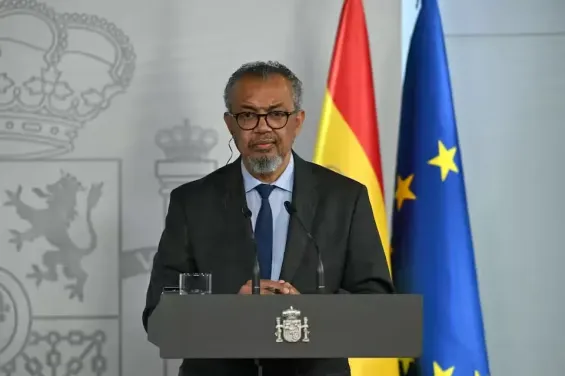
Tedros Adhanom Ghebreyesus, head of the World Health Organization (WHO), warned Tuesday that the work of health authorities «is not over» following the evacuation of more than 120 passengers and crew members from the cruise ship MV Hondius, affected by a hantavirus outbreak.
Speaking during a joint press conference in Madrid alongside Spanish Prime Minister Pedro Sánchez, Tedros said «additional cases could emerge in the coming weeks» because of the virus’s long incubation period.
He explained that evacuees will need to remain under active monitoring for 42 days, until June 21, as the last known exposure to the virus was recorded on May 10.
Tedros also stressed that the global health risk linked to the outbreak «remains low» and that there is currently no indication of a wider spread. He praised Spain’s response, thanking the country for fulfilling «its legal obligations under international law» as well as «its moral duty of solidarity» toward the passengers.
For his part, Pedro Sánchez described the international evacuation and repatriation operation carried out from the Canary Islands as a «success», saying it had been conducted «without incident».
More than 120 passengers and crew members of various nationalities were repatriated on ten special flights involving nearly 400 professionals from Spain’s ministries of Health, Interior, Defense, and Territorial Policy.
The strain detected aboard the Hondius, known as the «Andes hantavirus», is considered rare because it can spread from human to human. Hantavirus is generally transmitted through contact with infected rodents, particularly via their urine, droppings, or saliva.