

 chargement...


In a historic first, Curaçao have qualified for the 2026 FIFA World Cup, becoming the smallest nation by population ever to reach the tournament. With just 185,000 inhabitants, the Caribbean island has defied the odds, and former Morocco international goalkeeper Khalid Sinouh played a key role in laying the foundations for the achievement.
Sinouh began his professional career at the age of 19, making his debut in 1994 with HFC Haarlem in the Dutch top flight. He went on to represent several clubs in the Netherlands, including Heerenveen, RKC Waalwijk, Utrecht, PSV Eindhoven, NEC and Sparta Rotterdam.
.jpg)
The former goalkeeper earned caps for Morocco between 2004 and 2006. Yet his influence extended well beyond the pitch. Over the years, he built a vast network within Dutch football, particularly among players of migrant backgrounds, helping guide and mentor emerging talents.
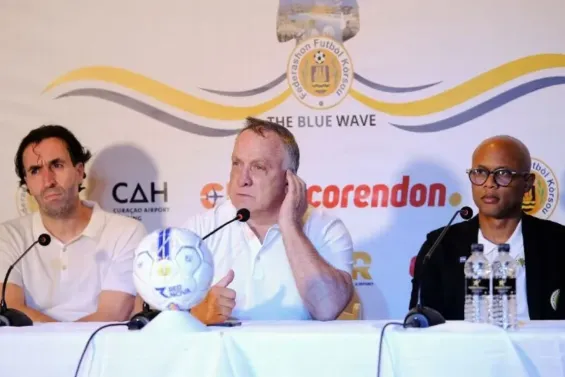
On January 15, 2024, the Curaçao Football Federation appointed Sinouh as technical director as part of an ambitious project aimed at qualifying the island for the 2026 World Cup. The challenge was considerable, with the national team facing deep financial and organizational difficulties.
In a later interview, Sinouh described the situation he inherited: «The players were not being paid because of arrears that ran into the hundreds of thousands. But I knew there was huge potential in Curaçao because I had worked as a scout and agent for many years. That is how you get to know many players».
An almost impossible mission
Sinouh quickly implemented a comprehensive rebuilding plan that extended far beyond football matters. Leveraging his network, he helped attract players such as Tahith Chong, Armando Obispo, Joshua Brenet, Arjany Martha and Rayvien Rosario. He also secured sponsors, improved logistics, arranged travel and accommodation, and helped resolve the financial problems that had long burdened the national team.
Perhaps his most important task was recruiting a coach with enough credibility to convince eligible players to commit to the project. The search ultimately led to veteran Dutch manager Dick Advocaat, whose appointment would prove decisive in Curaçao's successful qualification campaign.
.jpg)
Despite the rapid progress achieved under his watch, Sinouh's tenure was short-lived. On June 6, 2024, just 144 days after his appointment, the Curaçao Football Federation announced that the two sides had parted ways, citing differing views on the management of the national team's football project.
Following qualification, Sinouh expressed pride in having contributed to the achievement, stressing that Curaçao's World Cup berth was no accident but the result of a long-term sporting project focused on player development and building a competitive squad capable of challenging nations with far greater resources.
Although he left his post well before the World Cup, Khalid Sinouh remains closely associated with one of the greatest achievements in Curaçao's football history, having helped lay the groundwork for a project that turned a long-held dream into reality.
Drawn into a group alongside Germany, Côte d'Ivoire and Ecuador, Curaçao suffered a heavy 7-1 defeat to Germany in their opening match. Yet simply appearing on football's biggest stage remains an extraordinary accomplishment for this small nation in the southern Caribbean.