


 chargement...


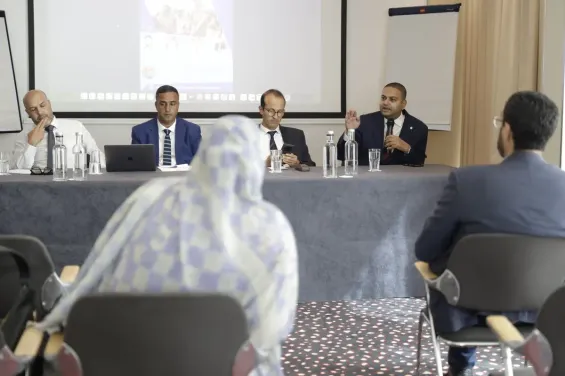
Accusations against the Polisario Front, calls for international investigations and warnings over the risk of destabilization in the Sahel brought the legal, humanitarian and security dimensions of the Sahara conflict into sharp focus at a conference held Thursday in Geneva on the sidelines of the 62nd session of the Human Rights Council. Bringing together experts, academics and civil society representatives involved in the issue, the event also highlighted recent diplomatic developments surrounding the decades-old dispute.
Several participants accused the Polisario Front of engaging in practices that they said contravene international humanitarian law in the buffer zones monitored by the United Nations Mission for the Referendum in Western Sahara (MINURSO). According to speakers, unarmed civilians were allegedly used to transport or store military equipment in these demilitarized areas before mobile launchers were deployed in attacks attributed to the separatist movement, notably against the city of Smara.
Civilians at the heart of concerns
The first part of the discussions focused on the principles of international humanitarian law and the protection of civilian populations. Participants stressed that civilians should never be involved in military operations and emphasized the ceasefire's role as a key safeguard for their security.
The debate also examined the purpose of the buffer zones established under MINURSO’s auspices. According to several presentations delivered during the conference, these areas, created to prevent military escalation between the parties, have allegedly been used in ways that are incompatible with their intended status.
Speakers argued that the reported incidents warrant investigations to identify those responsible and any potential sponsors. They also recalled concerns repeatedly raised by the UN Secretary-General since the collapse of the ceasefire in 2020.
A political solution favored by the UN
The second part of the conference focused on diplomatic developments. Participants noted that recent UN Security Council resolutions place increasing emphasis on finding a «realistic, pragmatic and lasting» political solution based on compromise between the parties.
In this context, several speakers presented Morocco’s autonomy initiative as the proposal currently enjoying the broadest international backing. They pointed in particular to the support expressed by a growing number of UN member states in recent years.
Among the speakers was Abdelbaset Syed Irsa, president of World Humanitarian Drive, who spoke about several visits he has made to Morocco’s southern provinces. He highlighted what he described as significant infrastructure and development projects in the region, contrasting them with conditions he said he observed in the Tindouf camps. He also defended Morocco’s autonomy initiative as a credible framework for resolving the conflict. Referring to the shelling that targeted Smara, he said he believed the attacks were primarily aimed at bringing the Sahara issue back into the international spotlight.
Security risks in the region
Another segment of the conference examined the conflict’s security implications. Mohamed Ahmed Kane, president of the African Institute for Peacebuilding and Conflict Transformation, presented an analysis of the potential links between separatist movements, cross-border crime and radicalization.
Drawing on academic research on terrorism, he argued that refugee camps can, under certain conditions, create environments conducive to the emergence of extremist dynamics. Referring to the attack on Smara, he said it met criteria commonly used in several international legal instruments to define a terrorist act.
Despite differing perspectives on the conflict, participants broadly agreed on one point: in a region already strained by instability in the Sahel, cross-border trafficking and the activity of armed groups, any further military escalation could have consequences extending well beyond the Sahara itself. For the speakers, only a negotiated political solution can offer a lasting resolution to the dispute.