


 chargement...


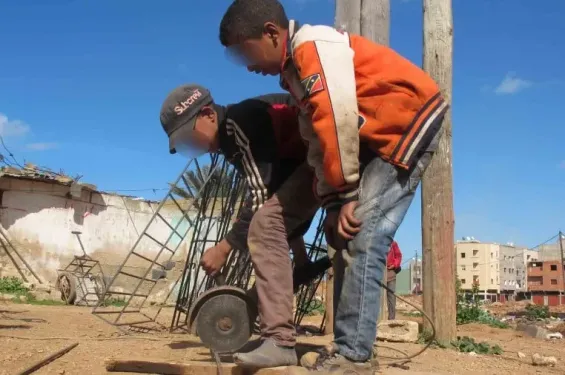
The Economic, Social and Environmental Council (CESE) called on Wednesday for the adoption of an integrated, locally driven public policy to eradicate child labor in Morocco, based on a principle of «zero tolerance» toward the employment of children under the age of 16.
Presenting the Council's opinion, titled «For an Effective Public Policy to Eradicate Child Labor in Morocco», at a meeting in Rabat, CESE President Abdelkader Amara said Morocco has made significant progress in protecting children's rights.
The number of children aged 7 to 17 engaged in economic activity has fallen by 80%, from 517,000 in 1999 to around 101,000 in 2024. However, child labor persists in several forms, including hazardous work, domestic labor, organized begging and other forms of exploitation.
According to the Council, the phenomenon is driven by poverty, household vulnerability, school dropout, the expansion of the informal economy and territorial inequalities, particularly in rural areas.
These findings are echoed in a public consultation conducted through the CESE's digital platform Ouchariko, which gathered 1,540 responses and underscored the urgent need to provide targeted support for economically vulnerable families to effectively tackle child labor.
Amara also highlighted the framework partnership agreement signed on March 30 between the CESE and the National Observatory for Children's Rights (ONDE), aimed at establishing a permanent coordination mechanism to strengthen child protection.
Presenting the report's findings, Karima Mkika, the rapporteur on the issue and a CESE member, said that 87% of working children are out of school, while 70% are employed in the agricultural sector in rural areas. She added that 102 human trafficking cases were recorded nationwide in 2025, leading to the identification of 93 child victims.
To address the issue, the CESE proposes five key priorities: strengthening governance and local monitoring, improving enforcement and expanding the scope of existing legislation, increasing social support for vulnerable families, creating stronger links between education, vocational training and youth employment, and mobilizing all stakeholders through a shared responsibility approach.
The Council also recommends raising the legal minimum working age to 16, modernizing the labor inspection system, making part of social assistance conditional on school attendance, and creating a dedicated legal status for apprentices aged 16 to 18.