


 chargement...


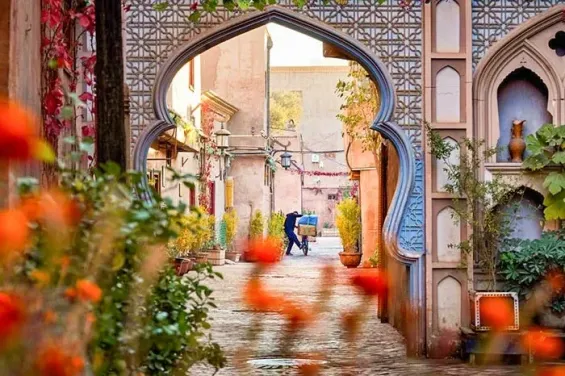
At first glance, many Moroccans would think they are wandering through the narrow streets of Marrakech's ancient medina. Ochre-colored walls, winding alleyways, carved wooden doors, bustling souks and artisans working in small workshops all evoke the atmosphere of the Red City. Yet the scene is not in Morocco, but nearly 8,000 kilometres away in Kashgar, an ancient oasis city in China's far-western Xinjiang Uyghur Autonomous Region.
Videos of Kashgar circulating online have left many Moroccans struck by its resemblance to Marrakech. During her visit, a Moroccan content creator said that without the Chinese signs, anyone would think they were in Morocco. So convincing was the resemblance that she even instinctively addressed a local resident in Moroccan Darija. «I don't know how to explain it, I feel like I'm in Marrakech», she says in the video. Similar reactions have come from several Arab content creators, many of whom said they felt as though they were exploring a Moroccan medina rather than one of China's oldest cities.
Across the Silk Road
The similarities, however, are the result of neither direct influence nor coincidence. Instead, both cities evolved within a broader Islamic architectural tradition, using similar construction techniques and locally available materials to adapt to comparable climates.

Founded more than 2,000 years ago, Kashgar emerged in the 2nd century BCE as one of the most important oasis cities on the ancient Silk Road, twice as old as Marrakech, which was founded by the Almoravids in the 11th century. Located at the crossroads linking China, Central Asia, Persia and the Indian subcontinent, Kashgar grew into a thriving commercial and cultural hub where merchants, pilgrims and travelers exchanged not only goods, but also ideas, and artistic traditions.
Its 3.6-square-kilometre Old City is defined by a maze of narrow alleyways designed to provide shade from the region's intense summer heat. Houses built from clay and adobe bricks give Kashgar the same earthy tones that characterize Marrakech, while modest exterior walls conceal interior courtyards that provide privacy and natural cooling, features instantly familiar to anyone who has wandered through the medinas of Marrakech or Fez.
The resemblance extends beyond architecture. Like Marrakech, Kashgar developed around bustling markets where neighbourhoods were traditionally organized by craft. Woodcarvers, coppersmiths, potters, textile makers and food vendors still practice trades passed down through generations, while tea houses and bakeries continue to animate the streets.
At the heart of the Old City stands the Id Kah Mosque, one of the largest mosques in China. Originally built in the 15th century, it remains Kashgar's spiritual centre and a symbol of its centuries-old Islamic heritage.

Despite its age, Kashgar remains a living city rather than an open-air museum. For many Moroccans discovering the city online, one question inevitably comes to mind: how can a place on the other side of Asia feel so remarkably like Marrakech?





 Fil Info