


 chargement...


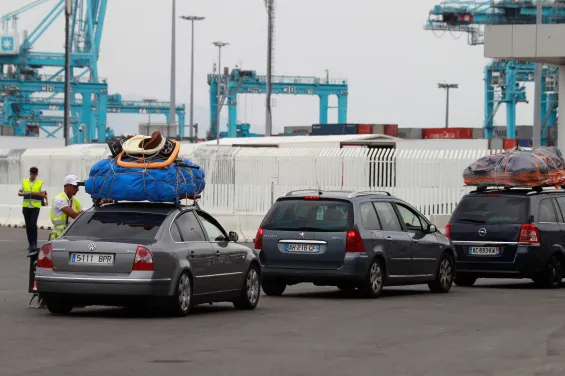
Since its launch on June 10, Operation Marhaba 2026, which manages the summer transit of Moroccans living abroad, has continued to gather pace. As of July 6, 332,039 passengers and 82,545 vehicles had crossed to Morocco via ferry routes linking Spain with Moroccan ports, as well as routes serving Ceuta and Melilla, according to the latest figures from Spain's Directorate-General for Civil Protection and Emergencies.
Direct ferry routes to Morocco continue to account for the bulk of the traffic. The Algeciras–Tangier Med route remained the busiest, handling 124,145 passengers and 40,963 vehicles across 624 sailings since the start of the operation. It was followed by Tarifa–Tangier City, with 65,477 passengers and 8,369 vehicles on 303 sailings, and Almeria–Nador, which carried 44,644 passengers and 10,926 vehicles across 72 crossings.
The figures also include ferry routes to Ceuta and Melilla, which many Moroccans living abroad use before entering Morocco through the land border crossings. The Algeciras–Ceuta route recorded 68,509 passengers and 15,635 vehicles across 442 sailings, while services from Almeria, Malaga and Motril to Melilla carried a combined 29,264 passengers and 6,652 vehicles.
Almeria–Nador posts strongest growth
The latest data also reveal contrasting traffic trends compared with the same period in 2025. The Almeria–Nador route recorded the strongest growth, with passenger traffic rising 25.1% and vehicle traffic 14.4%. By contrast, the Algeciras–Tangier Med route saw passenger numbers fall 4.4% and vehicle traffic 2.7%. The Tarifa–Tangier City route continued to perform strongly, posting increases of 5.1% in passengers and 10.9% in vehicles.
Overall, between June 15, when transit crossings began, and July 6, Operation Marhaba 2026 recorded 347,142 passengers and 87,968 vehicles aboard 1,519 sailings across all participating routes. Direct ferry links to Morocco, together with routes to Ceuta and Melilla, accounted for more than 95% of all passengers and around 94% of all vehicles recorded during the period.
Traffic is expected to increase further during the second half of July and into early August, when Operation Marhaba traditionally reaches its peak as summer holidays begin across several European countries.
Operation Marhaba is one of the world's largest seasonal transit operations, organized each year through coordination between Moroccan and Spanish authorities to facilitate the travel of millions of Moroccans living abroad between Europe and the Kingdom.