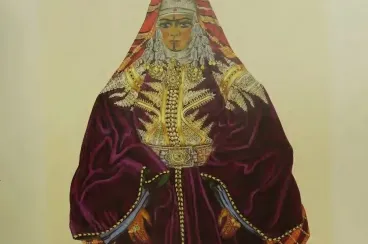
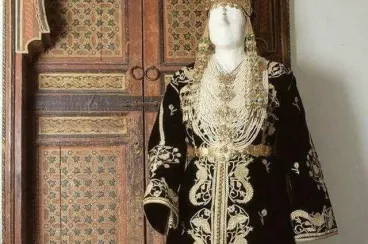
Among Morocco’s cultural centers shaped by Andalusian heritage, Tetouan is renowned for its distinctive interpretation of the caftan. At the crossroads of local traditions and regional influences, it reflects the region’s craftsmanship and refinement, infused with the elegance of the Nasrid courts. Over time, this style has had a broader influence, notably blending with clothing traditions in Oujda.
In Fez, the caftan stands as a symbol of Morocco's rich textile heritage, blending Andalusian influences with local craftsmanship to create garments of exquisite luxury and cultural significance. Fashion designer Aziza Belkhayat champions the preservation of this tradition, ensuring that the artistry of the Fez caftan continues to thrive amidst modern innovations.
Madrid is best known today as the capital of Spain. Yet long before it gained this status, it was founded in the 9th century as a Muslim city by the Umayyad rulers of Al-Andalus. This origin, and the social structure it fostered, remain little acknowledged, but archaeological evidence and historical accounts trace the city’s roots to this period, a time when Muslims, Christians, and Jews lived side by side for centuries.
 Les articles les plus...









 chargement...