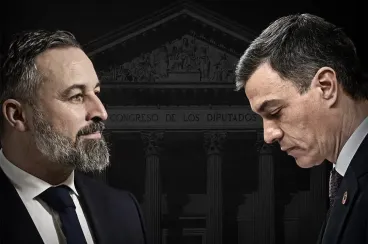
After seven and a half years at the helm of the Spanish government, Pedro Sánchez's grip on power has significantly weakened. This decline should draw particular attention from the Moroccan state and the Moroccan community residing in Spain (MRE), as the weakening of the socialists directly benefits the far right.
Established in about ten countries around the world, no fewer than thirty-four Moroccan leaders and civil society figures residing abroad have announced the creation of a platform designed to enhance their political participation in Morocco. In their open call for signatures, they advocate for a post-October 31 dynamic.
The Moroccan government's recent amendment to Organic Law No. 04.21, introducing penalties for spreading false information about elections, has ignited a heated debate over its implications for free speech. While Interior Minister Abdelouafi Laftit insists the measure safeguards electoral integrity, critics argue it stifles democratic dissent.
 Les articles les plus...









 chargement...