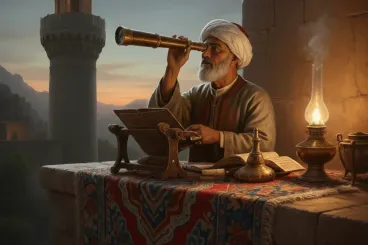
During the Abbasid era, Ramadan observances underwent significant transformation, with the institutionalization of moon-sighting by judges and the introduction of vibrant customs such as the Musaharati and mosque illumination. These innovations, alongside enhanced social welfare efforts and public iftar banquets, have left a lasting impact on how the holy month is celebrated across the Islamic world today.
In Morocco, New Year’s Eve celebrations are marked by family traditions, including enjoying a special cake, watching TV programs, and sending New Year wishes through postcards or calls.
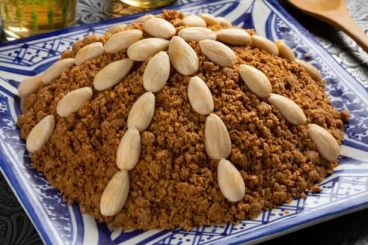
At the intersection of history, culture, and gastronomy, sellou represents the fusion of civilizations in Morocco, beginning with Amazigh traditions. Made from grains and honey, assellou was originally served as a dessert in the Almoravid courts. Over time, it evolved to reflect changes in consumption, adaptations, and regional influences, now incorporating local, Andalusian, and Arab-Oriental elements.
Amit Hai Cohen is a Jewish musician and filmmaker living in Jerusalem. His grandparents lived 69 years ago in Morocco, most precisely in a village southeastern Ouerzazat called Tizgui. Amit has always been connected to the kingdom, a thing that he managed to portray through his work and art. Interview.
 Les articles les plus...









 chargement...





![Amit Hai Cohen, an Israeli filmmaker who is proud of his Moroccan origin [Interview]](https://static.yabiladi.com/files/articles/d7ce28f766c2c13b7bd7f0377e6a0e1c20170825171644chaabi-.png)