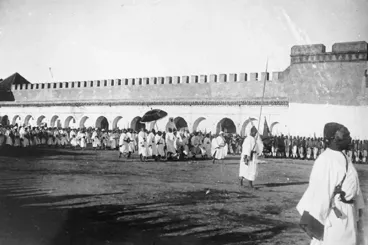
Long before television broadcasts, Morocco’s royal Eid al-Adha procession became the setting for a historic first. In 1901, Sultan Moulay Abdelaziz authorized photographers to publicly document the celebrations.
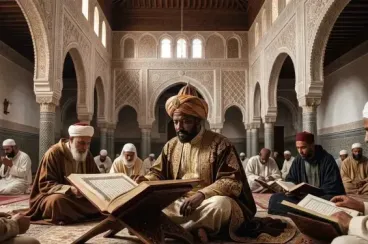
During the golden age of the Saadian dynasty under Sultan Ahmad al-Mansur al-Dhahabi, Ramadan was a time of religious devotion and scholarly gatherings, highlighting the Sultan's role as a protector of the faith. However, following his death, the dynasty plunged into chaos, with internal conflicts leading to the suspension of religious practices and the closure of mosques, starkly contrasting the vibrant spiritual life of al-Mansur's reign.
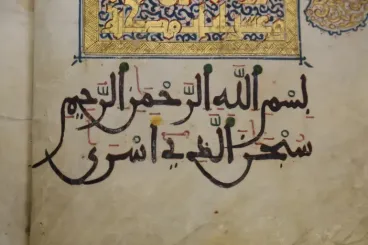
In 1344, Sultan Abu Al-Hasan Ali bin Othman gifted a beautifully handwritten and ornamented Qur’an, known as the Moroccan Raba’a, to Al-Aqsa Mosque, making it one of five sacred copies he dedicated to holy Islamic sites. Today, only 24 of its original 30 volumes survive, showcasing exquisite Moroccan calligraphy and geometric artistry rooted in spiritual symbolism.
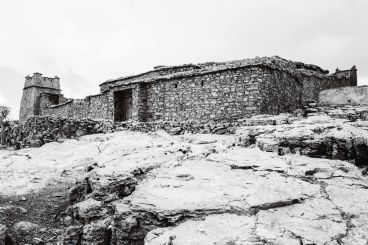
Morocco is embarking on a bold new chapter in disaster preparedness, with a 7 billion dirham plan to build crucial reserves across the Kingdom. But this initiative isn’t just about modern solutions—it's deeply rooted in a history of ingenious survival tactics, from ancient grain storage systems to sacred institutions that have long shielded the vulnerable. Discover the fascinating ways Morocco has weathered crises for centuries.
Ahmed al-Mansour, the Saadian Sultan of Morocco from 1578 to 1603, was deeply committed to intellectual pursuits, hosting scholarly gatherings and religious celebrations in his palace. During Ramadan, he initiated special lectures that involved reciting and studying Sahih al-Bukhari, in what we can call a 16th-century form of today's Dorouss Hassania.
 Les articles les plus...









 chargement...